Lockouts · Richmond Hill
Broken Key Extraction
You were locking up on the way out when the key broke in the lock.
In plain words
A car key that breaks in the door or the ignition is handled with the same extraction tools, with one difference. On most vehicles the plastic head of the key carries the transponder chip and the remote buttons, and that half is usually intact in your hand. Once the blade is drawn out of the lock, a new blade can often be cut and fitted to the existing head, so the chip keeps talking to the car without reprogramming. The ignition wafers are checked for disturbance and the steering lock is confirmed free. Proof of ownership is asked for before work begins.
How the visit goesThat key had been bending a little for years, and you kept straightening it. Today it finally cracked at the deepest cut. The stub is in the lock, and the spare you found goes in a few millimetres and stops against it.
Broken Key Extraction
How the visit goes
Locked or unlocked right now
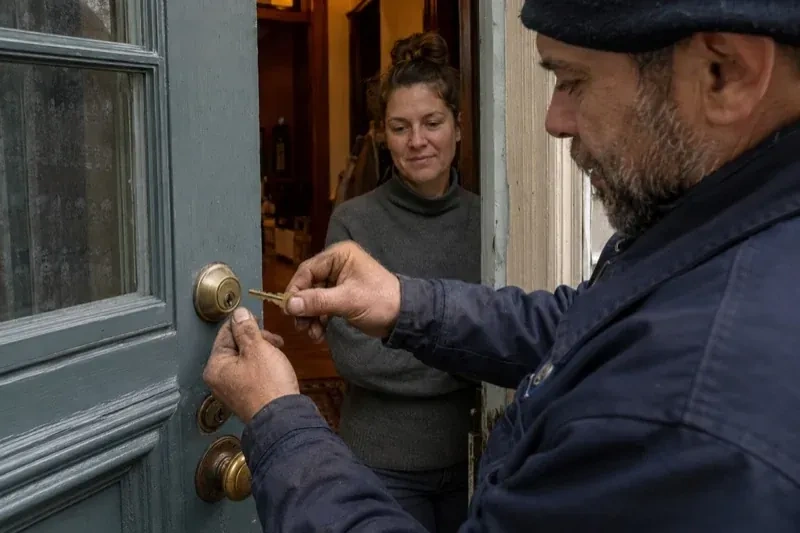
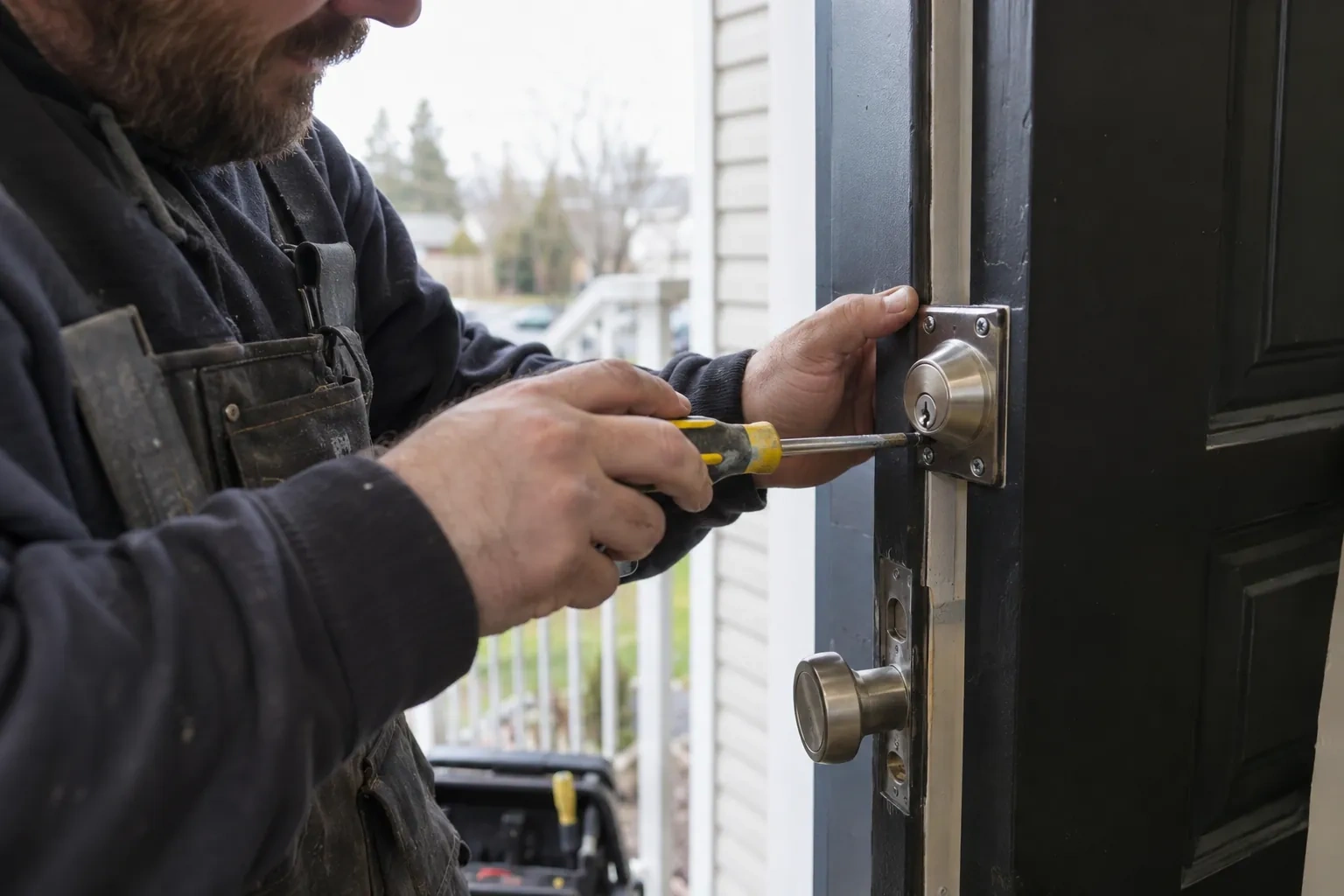
Whether the bolt is thrown changes the order of work. If the door is locked, extraction is the first half and getting you inside is the second; the locksmith plans both so the door is opened with the least fuss once the keyway is clear. If the key broke while you were locking up and the door is open, the priority reverses: the fragment comes out and the door is made secure before anything else is discussed, so you can leave when you need to. On a vehicle the same question applies to the door and, separately, to whether the ignition turns.
Drawing it out with a hook extractor
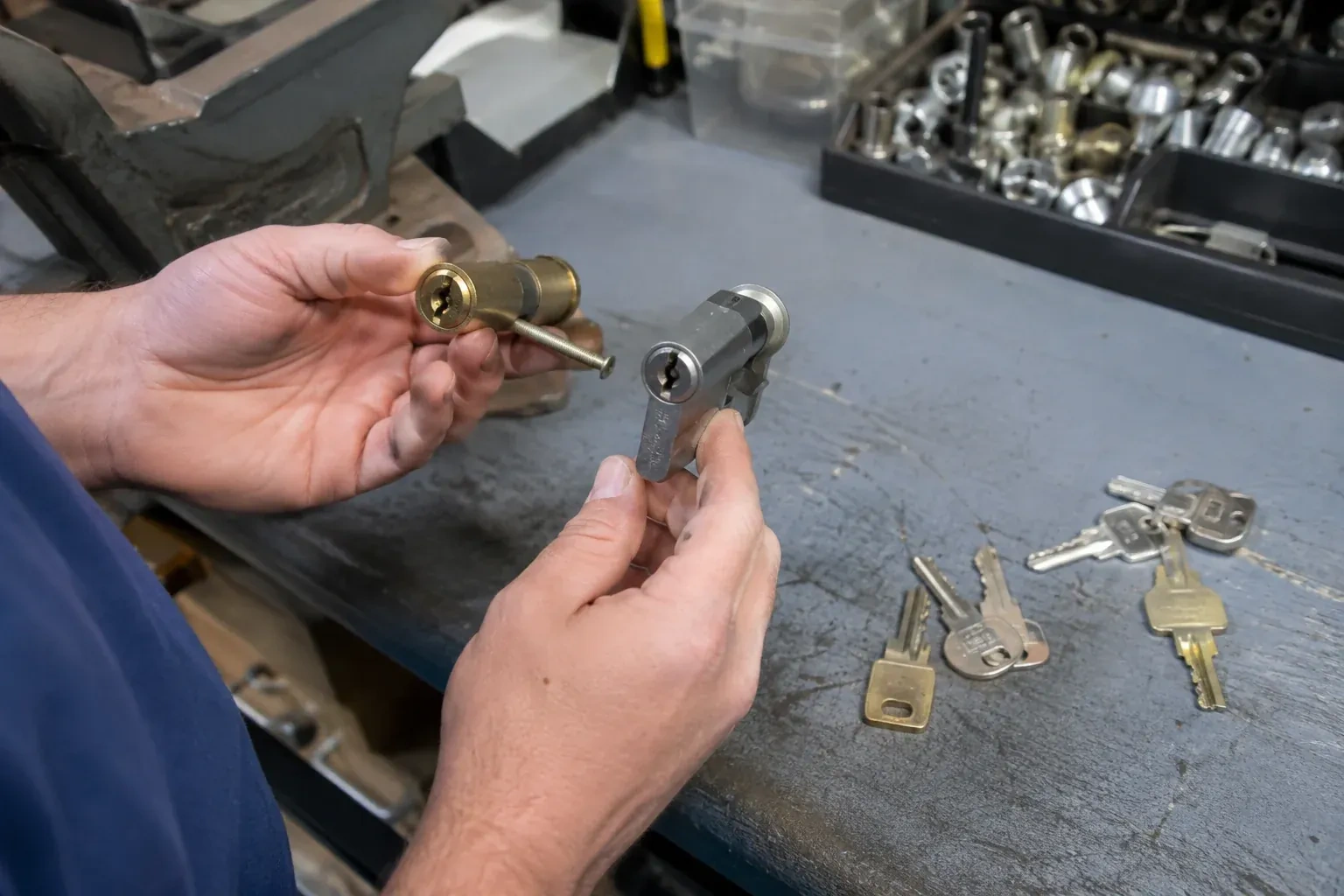
Every keyway has grooves, called wards, that run along its length above and below the blade. A hook extractor is a slim strip of spring steel thin enough to ride in one of those grooves beside the fragment. The locksmith slides it in past the broken piece, rotates it slightly so the barbed tip catches a cut in the blade, and draws it back out in a straight line. The pins are lifted clear as the piece passes them, exactly as they are when a key is withdrawn. It is a patient, felt process, and the cylinder is untouched by it.
A lock that turns like it should
The visit closes with the lock proving itself. The new key goes in fully, turns through its full travel and comes out without a catch, from both sides, first with the door swung open, then with it shut against the strike. The bolt is watched seating fully in its pocket. You are shown the fragment that came out and told what condition the cylinder was in. Anything the locksmith noticed, a strike screw backing out or a hinge that has dropped, is pointed out so it is not a surprise later. The door is locked with your own new key as the last act of the visit.
Broken Key Extraction
In the van
Hook key extractors
Compressed air for the keyway
Manufacturer-approved cylinder lubricant
Replacement cylinder or deadbolt
Vehicle key blades and chip shells
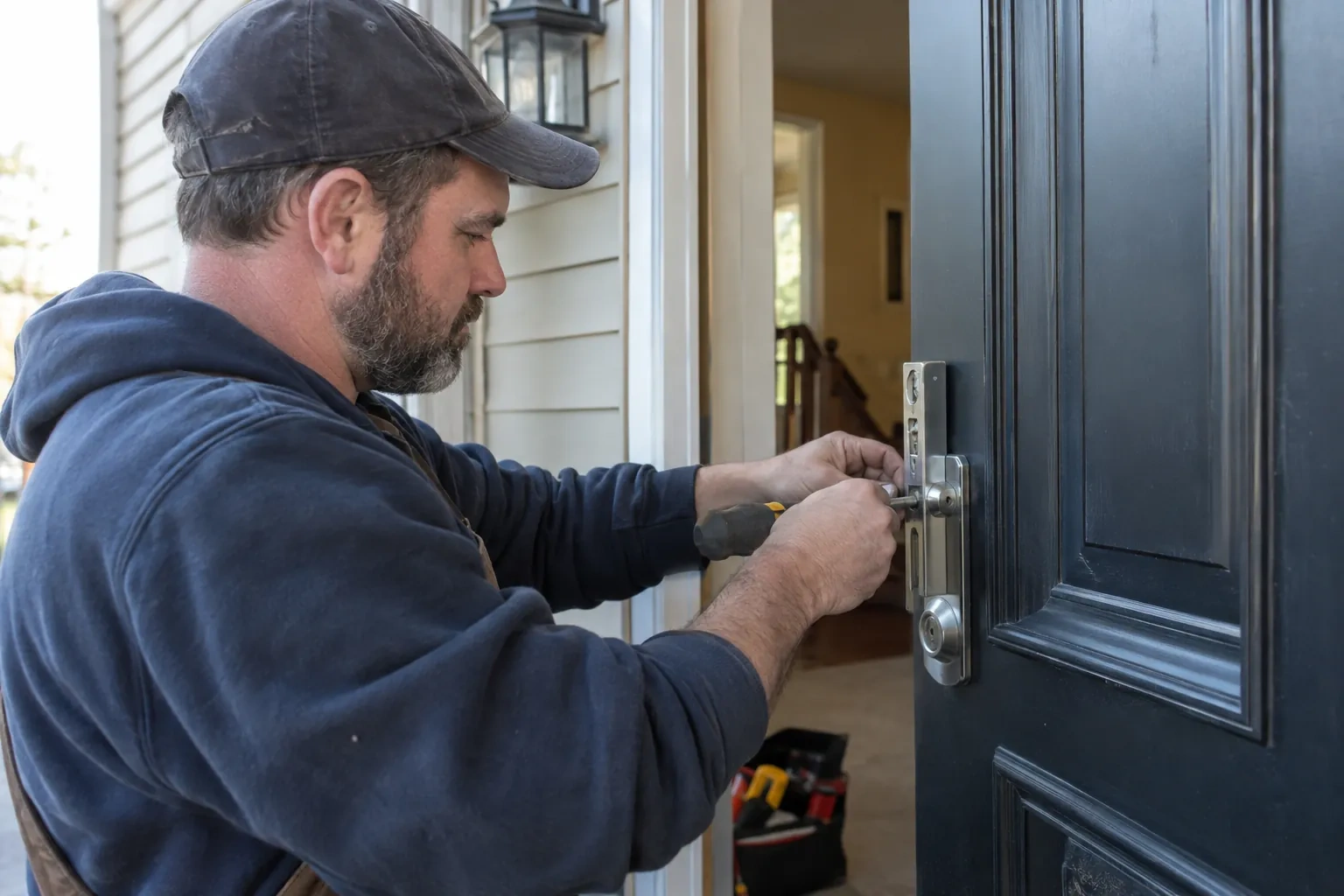
Broken Key Extraction
What affects the quote
Anything added since the break
Glue, a second key or marks from a screwdriver mean clearing and sometimes repair before extraction can start, and that added time is named in the quote.
Where the key broke
A house deadbolt, a knob, an older mortise case, a padlock, a car door and a vehicle ignition each call for different access and different care, and the quote follows the hardware.
Locked or unlocked door
If the door is locked, the extraction is followed by opening it, which is quoted as its own part of the visit. If the door is open, the work is extraction and securing.
What to have ready
- Would you like extra keys cut while the locksmith is there?
- Do you still have the other half of the key?
- Where did the key break: a house door, a padlock, a car door or an ignition?
Broken Key Extraction: questions
QuestionsPart of the key is sticking out. Can I just pull it with pliers?
If a good length shows and the plug is at its normal rest position, a firm straight pull sometimes works. The risk is pushing instead of pulling, or twisting, which drives the piece deeper and can bend a pin. If it does not come on the first gentle try, stop there and leave it for extractor tools, which grip the cuts without loading the cylinder.
My key is a restricted or high-security type. Can it still be extracted and replaced?
Extraction is the same careful process; the keyway is usually narrower and the cuts more complex, so it takes longer. The replacement key is different: restricted blanks are cut only from the system's records, so have the authorization card that was supplied with the system to hand, or the locksmith who installed it is contacted. Until then the spare, if you have one, keeps the door working.
Why do keys break more in winter?
A daytime thaw sends meltwater into the keyway, and overnight it freezes with the plug held solid. The key goes in, meets resistance, and the natural reaction is to turn harder. Brass gives before ice does, especially at a deep cut that has thinned over years. Cold also stiffens old grease in the cylinder. De-icer, gentle warmth and a dry lubricant break the pattern.
Related services
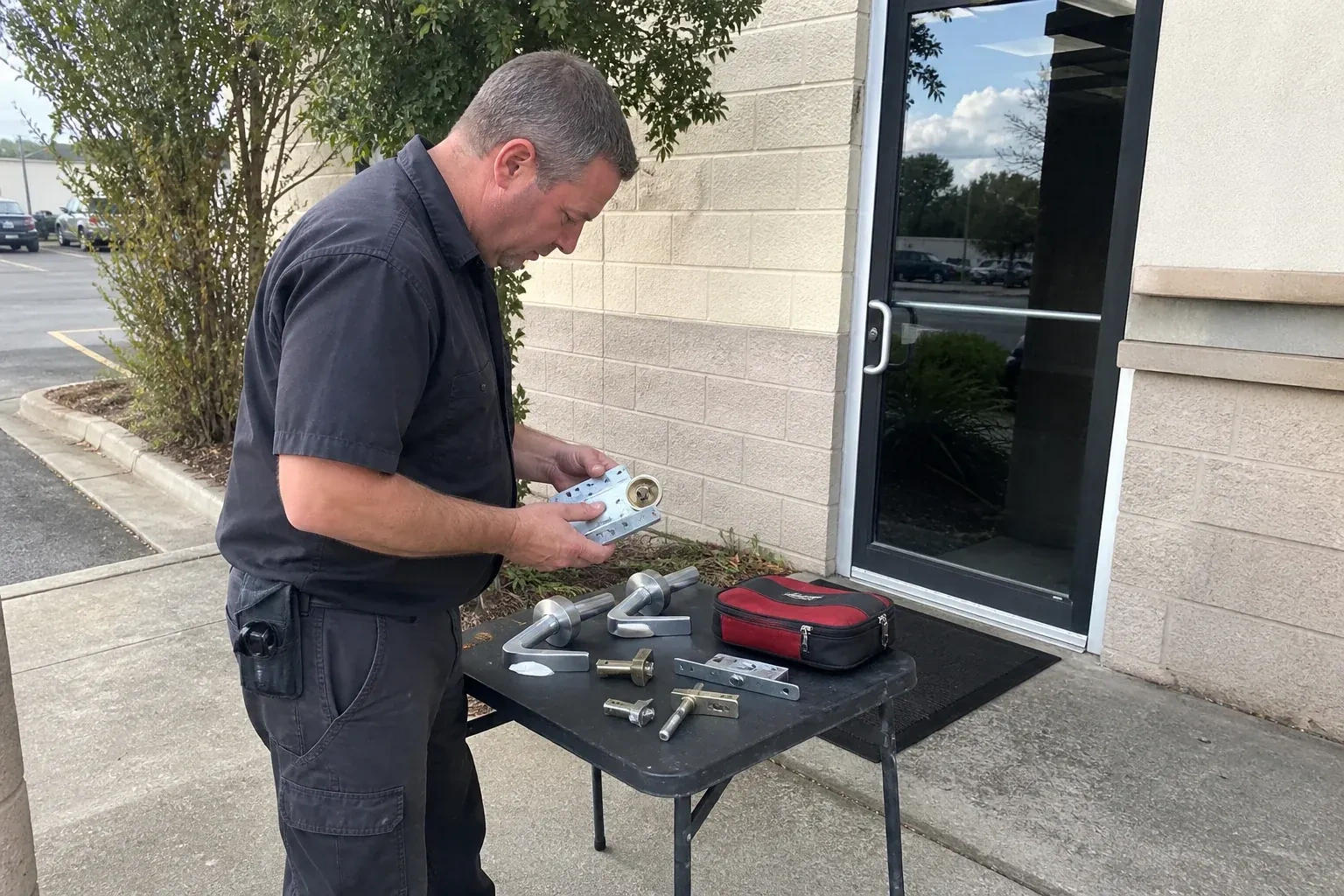
- Business Lockout ServiceMinus eighteen with a wind, and the exterior cylinder on the shop door has frozen solid overnight after yesterday's slush.
- Break-In Damage Lock RepairThe patio slider is sitting crooked on its track.
- Seized & Jammed Lock OpeningThe key slides all the way in, exactly as it has for years, and then refuses to turn in either direction.