Lockouts · Richmond Hill
Seized & Jammed Lock Opening
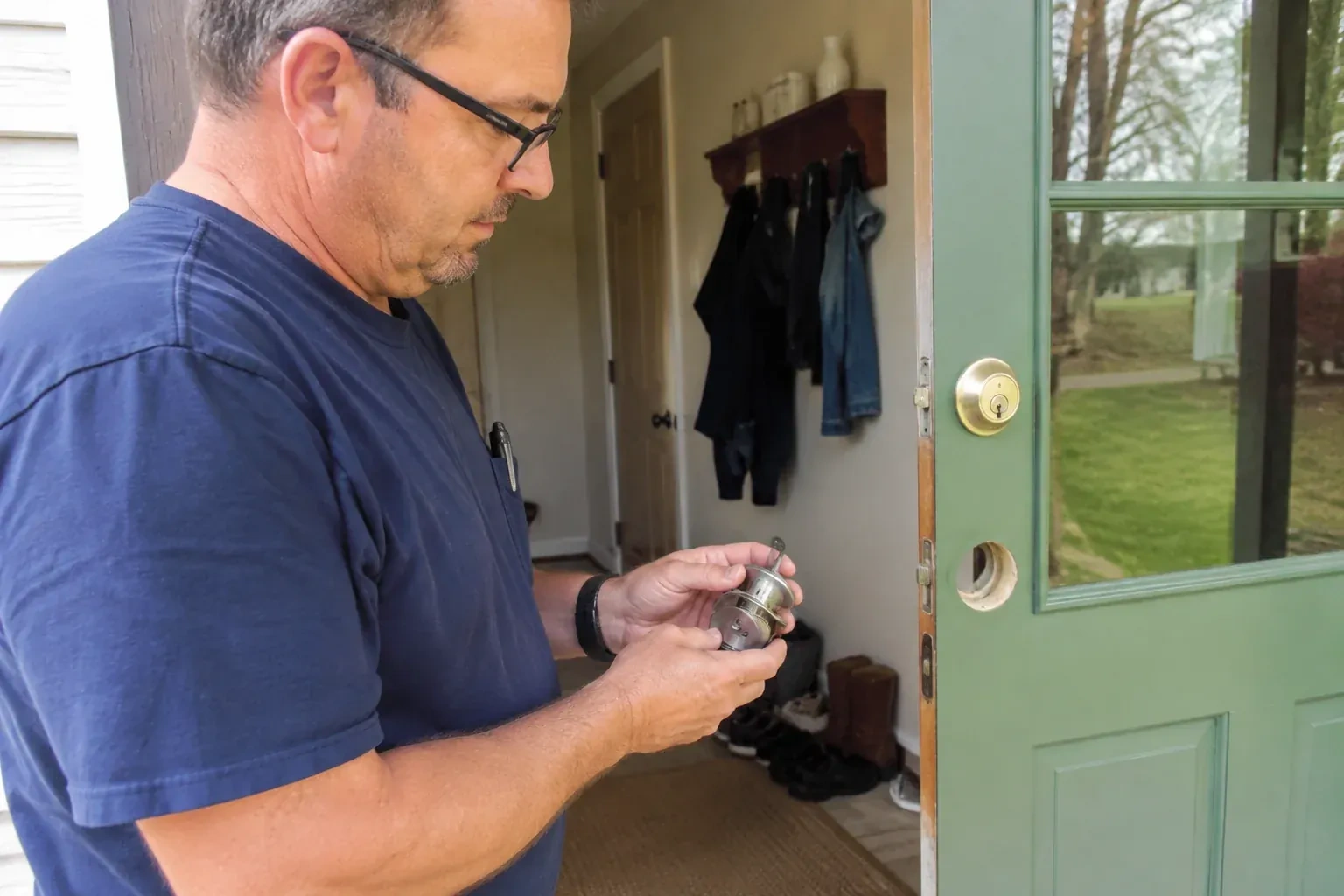
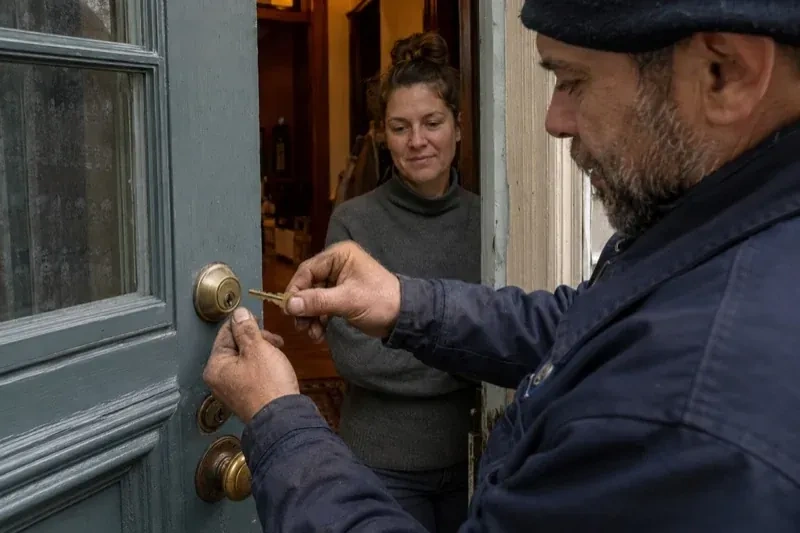
The key slides all the way in, exactly as it has for years, and then refuses to turn in either direction.
In plain words
This service has a season here. The first wet fortnight of winter sends meltwater into keyways that freezes overnight, and doors on the north and shaded sides of a building stay iced the longest. Salt spray from driveways and walkways leaves a crust that thickens with every thaw. Then summer humidity swells wood doors until the bolt drags in its pocket. A jammed lock opening in these conditions means thawing without boiling water, flushing out salt, drying the cylinder, and dressing it with a lubricant that sheds moisture, along with a check of the door so the same weather does not jam it again next month.
How the visit goesThe key turns a full circle without any resistance and the deadbolt stays exactly where it is. There is no click, nothing moves behind the face of the lock, and the door is as closed as it was before you touched it.
Seized & Jammed Lock Opening
How the visit goes
Loading the door while the key is worked
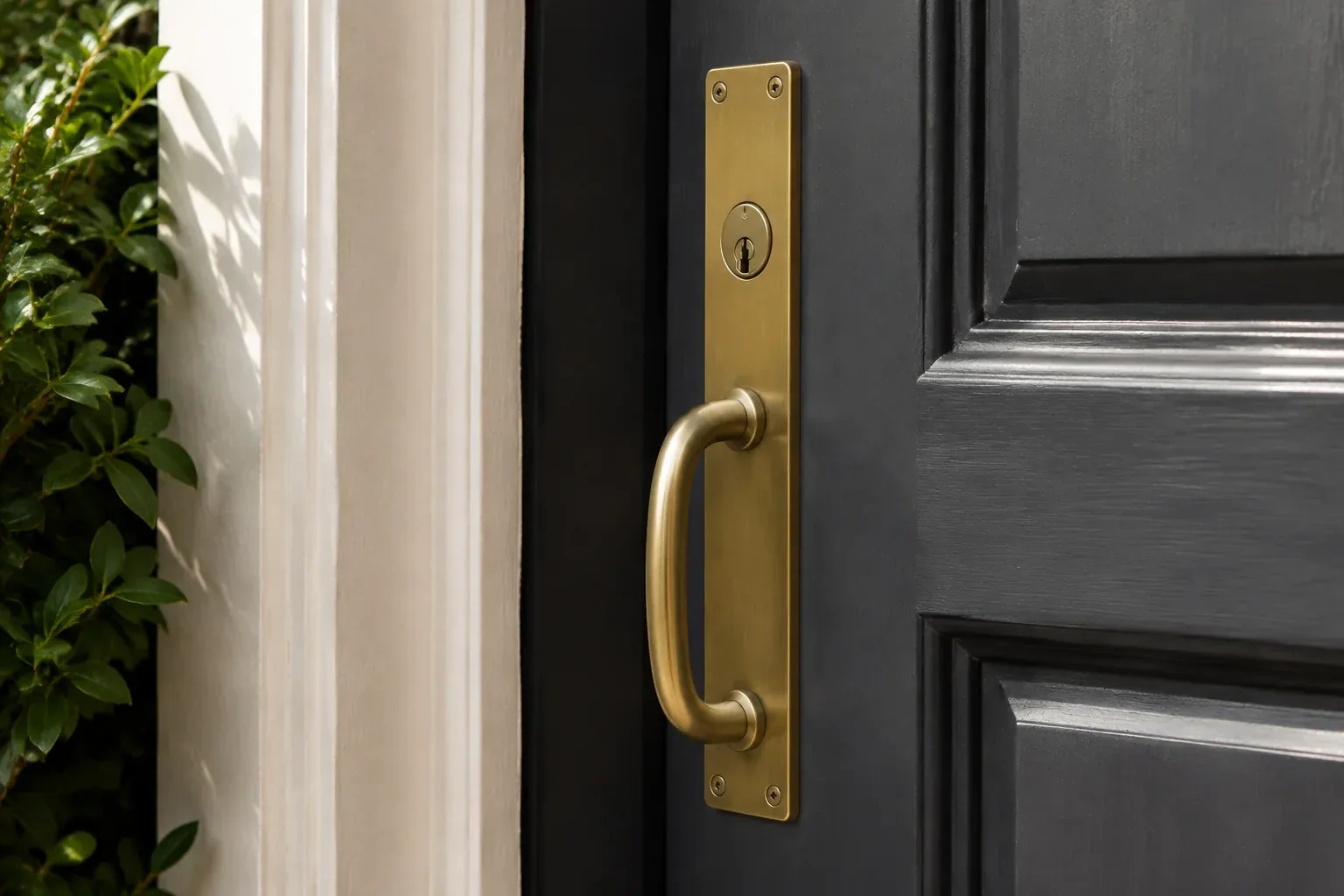
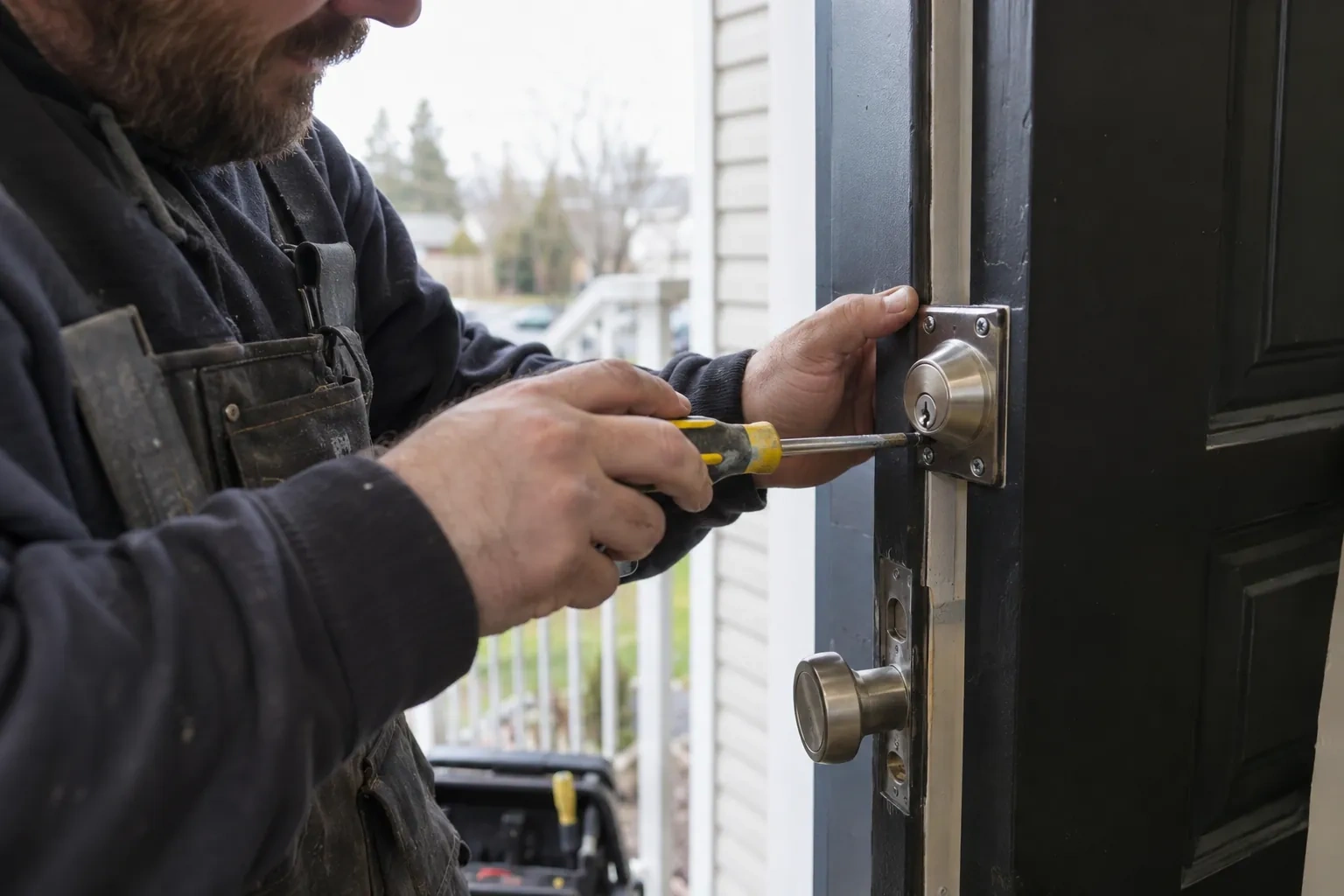
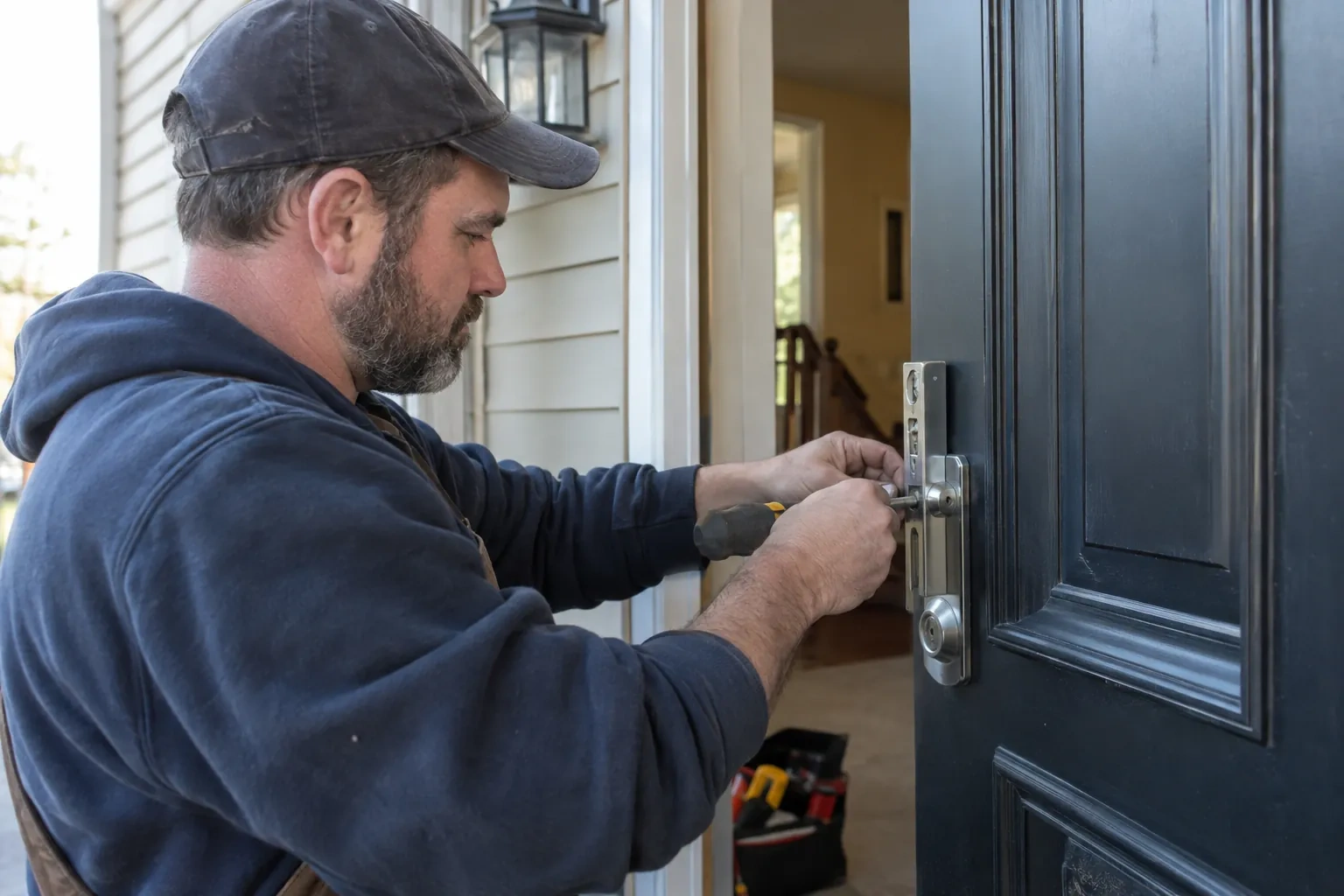
With the lock family narrowed, the locksmith puts a hand on the door. Pushing it into the frame, pulling it out, and lifting on the handle each change how a bound bolt sits in its pocket, and the key is tried gently in each position. If the key frees up under one of those loads, the door is the cause. Where a second entrance is open, the same lock family is compared with the door swung wide, since a bolt that throws smoothly in mid-air and binds when closed has been pinched by the frame. Nothing is forced during this test; it is a diagnosis, not an attempt.
When corrosion has taken the core
Occasionally the plug or shell has rusted or pitted past the point of cleaning, or an earlier forcing has twisted the plug in the shell. Then the cylinder is replaced rather than rebuilt. The locksmith matches the keyway and finish so the new part looks like the old one, and where the keyway allows, pins the new cylinder to the key already on your ring so nothing else in the house changes. If the whole lockset is tired, a replacement deadbolt or lever set goes on in the same visit, with the strike checked to suit it. The old parts are handed over so you can see exactly what failed.
Keys that match the lock again
Where a worn or drifted key was part of the jam, you now hold a key cut from the code or from a fresh master, and every spare has been tried in the lock. Retire copies that needed force, and cut future spares from the good key rather than from each other, since each generation of copying adds error. Label the keys if several locks are involved. If the cylinder was replaced and pinned to your existing key, the whole house is still on one key. Keeping a written note of the keyway and, where it exists, the key code makes any future key a simple cut.
Seized & Jammed Lock Opening
In the van
Key blanks and code cutter
Penetrating lubricant
Dry PTFE or graphite lock lubricant
Long hinge screws
Lock de-icer
Seized & Jammed Lock Opening
What affects the quote
Ice and salt on the day
A cylinder frozen solid or crusted with salt needs thawing, flushing and drying before it can even be diagnosed, and a winter call is quoted with that time in mind.
Small parts behind the cylinder
Tailpieces, cams, springs, cylinder caps and pins are minor items, but each one used is named on the quote so you can see what went into the lock.
Type of lock on the door
A residential deadbolt, a knob latch, a lever set, a mortise case in an older house and a high-security cylinder each take different tools and time to open and to service.
What to have ready
- Does the lock work if you push, pull or lift the door while turning the key?
- Do you have a spare or original key you could try?
- Do you have identification, a lease or a management contact for the property?
Seized & Jammed Lock Opening: questions
QuestionsWhy does the lock only stick when the door is closed?
Because with the door open the bolt is throwing into thin air, and with the door closed it is throwing into a pocket that has moved. A door that has dropped on its hinges, swollen with humidity or been pushed out by thick weatherstripping lands the bolt against the edge of the strike plate instead of through the hole. A chalk mark on the bolt shows exactly where it hits, and the fix is on the frame, not in the cylinder.
How do I stop this from happening again?
Three habits cover most of it. Lubricate the cylinder with a dry lock product twice a year and keep oils out of it. Check that the door locks with no pressure on it each spring and fall, snugging hinge and strike screws when it starts to drag. Keep a lock de-icer handy and fit a keyhole cover on exposed doors. And act on the first stiff turn, because a lock that still turns is a smaller job than one that has stopped.
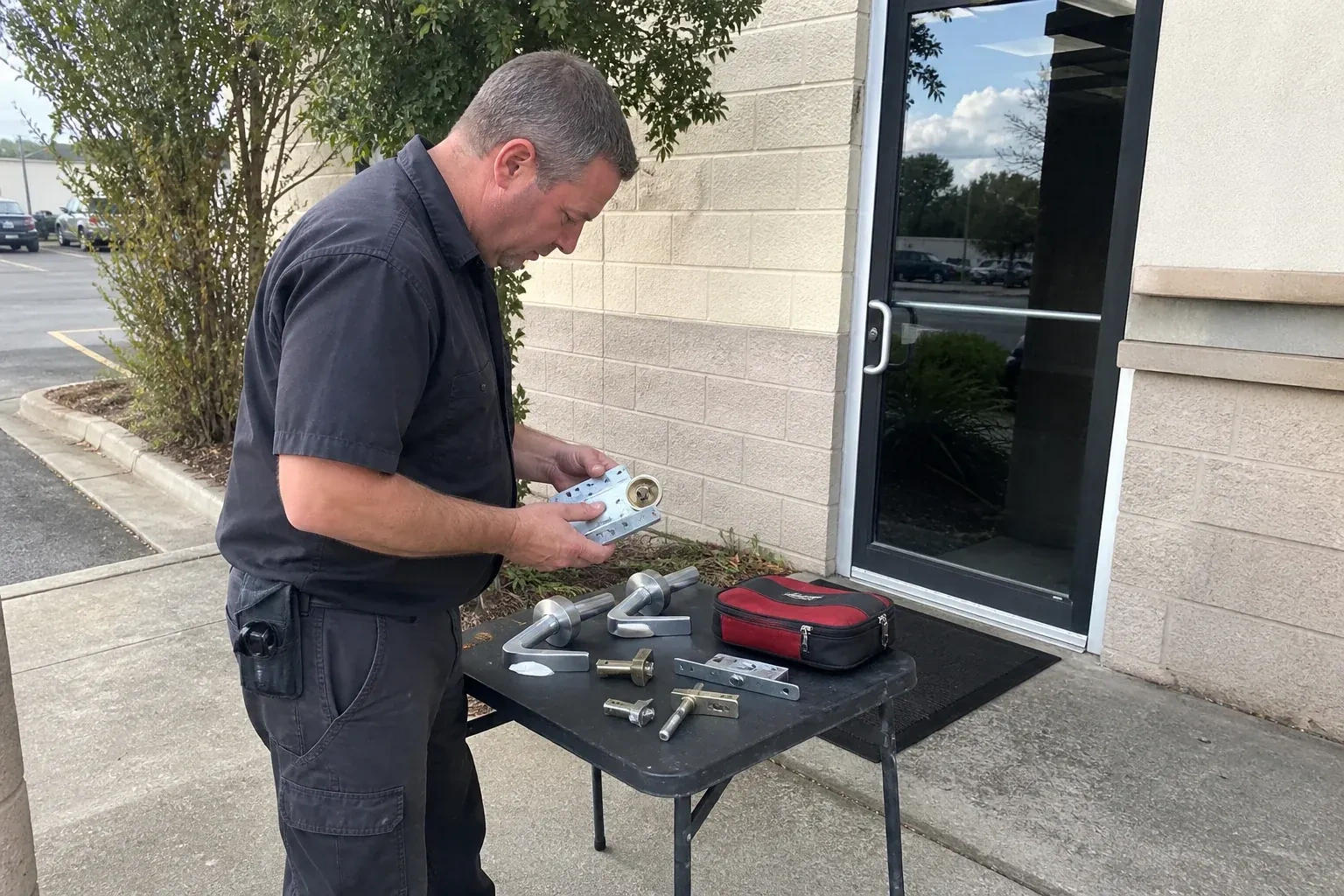
The lever on our shop door goes down but the latch does not pull back. Is that a lock problem?
It usually points to the mortise case rather than the cylinder, and it is a common complaint on commercial doors. Inside the case a return spring, a worn hub, or another part of the latch's drive path can have failed, so the lever moves without driving the latch. The locksmith gets the door open, draws the case out of the door edge, replaces the worn part, cleans and greases the contact points and refits everything, then tests lever, key and thumb-turn together.
Related services
- Business Lockout ServiceMinus eighteen with a wind, and the exterior cylinder on the shop door has frozen solid overnight after yesterday's slush.
- Broken Key ExtractionYou were locking up on the way out when the key broke in the lock.
- Break-In Damage Lock RepairThe patio slider is sitting crooked on its track.