Lockouts · Richmond Hill
Lost Keys — Same-Visit Rekey
The keys fell out of a gym bag somewhere between the arena and the parking lot.
In plain words
Rekeying and replacing a lock arrive at the same place by different roads. Replacement puts new hardware on the door: a new deadbolt or handle, and a finish that may not match its neighbours. Rekeying leaves all of that alone and changes what is inside the cylinder, commonly the pin stack on a conventional lock or a reset on a homeowner-rekeyable one, so a different key runs it. For hardware in good condition, that is the sensible choice: the door looks and feels as it did while the old key is retired. A worn cylinder can be replaced and keyed to match the rest in the same visit.
How the visit goesThe keys fell out of a gym bag somewhere between the arena and the parking lot. The ring has a tag from the building with the unit number on it. Whoever finds it has an address and a key that fits.
Lost Keys — Same-Visit Rekey
How the visit goes
How many keys, and who gets them
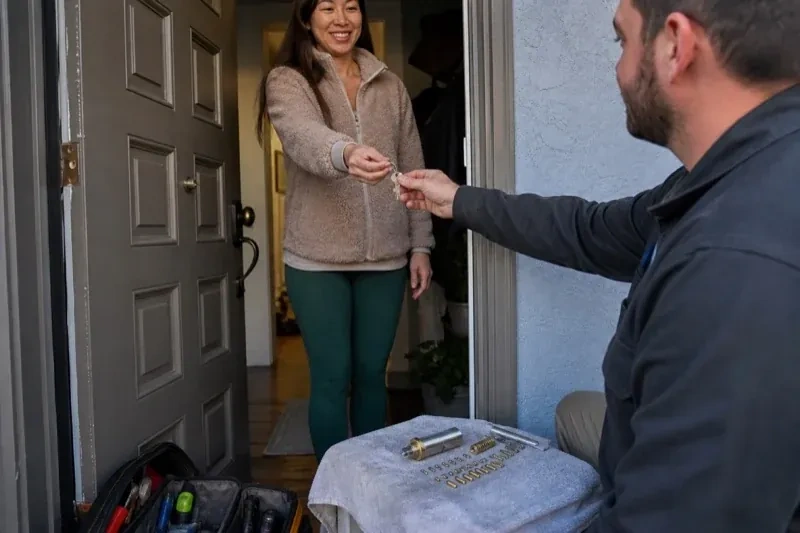
Before pins are touched, the number of keys is agreed, because that number is the whole point of key control. The locksmith asks who in the household or business needs one: each adult, a teenager, a caregiver, the neighbour who feeds the cat, the landlord, the cleaner. Each name gets a key and the total is written down. Anyone who had a copy of the old key but is not on the new list is, from that moment, simply someone without a key. Knowing the count on day one is what makes it possible, years later, to say with confidence exactly how many keys to this property exist.
Removing the cylinder without disturbing the door
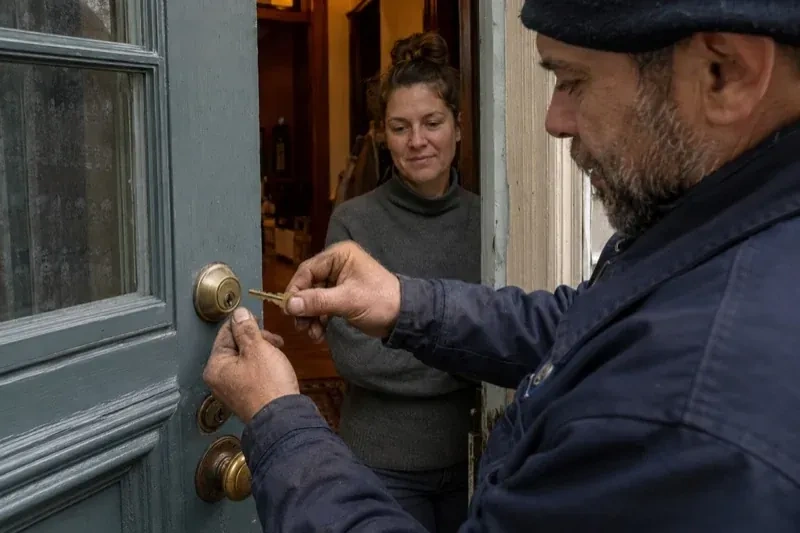
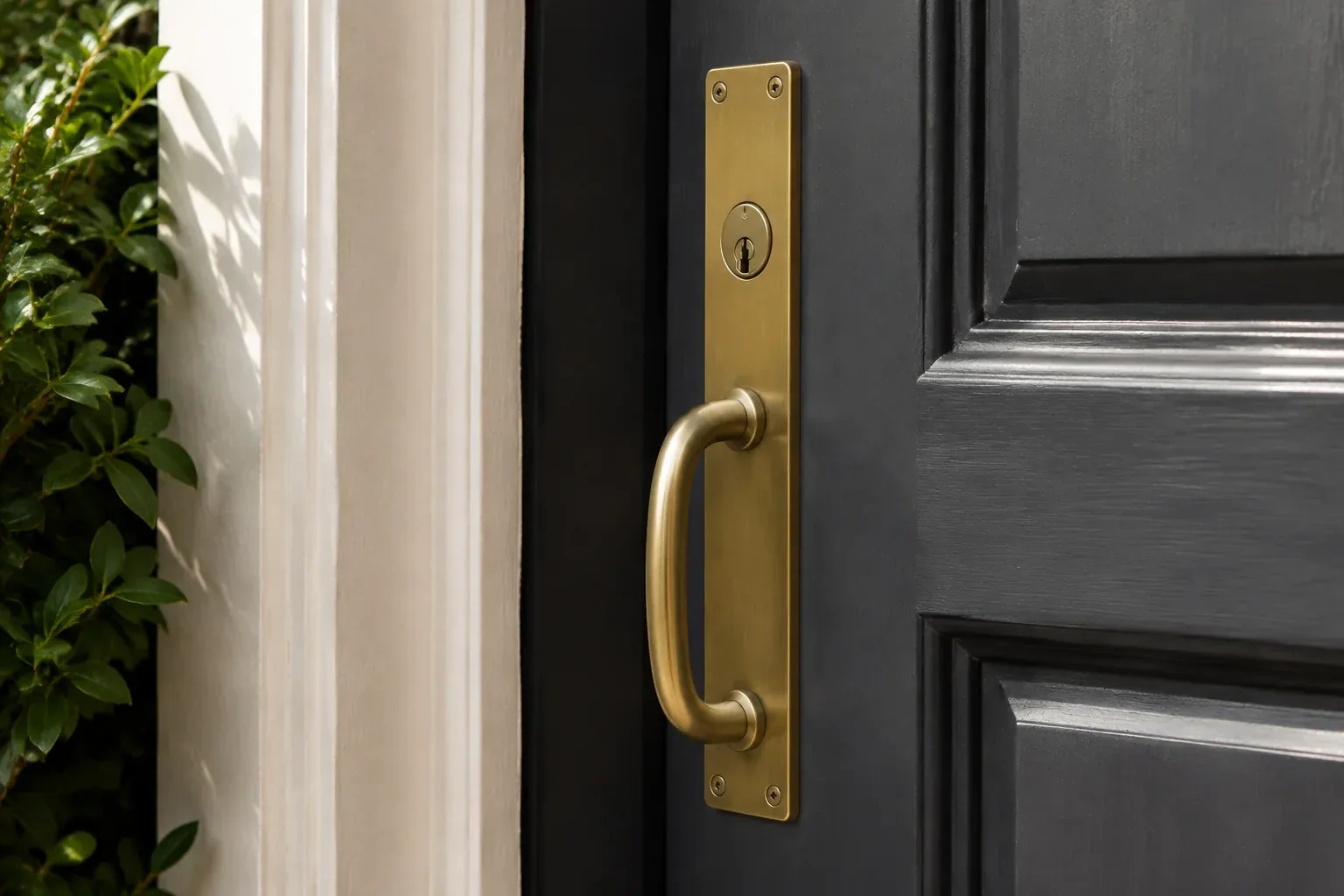
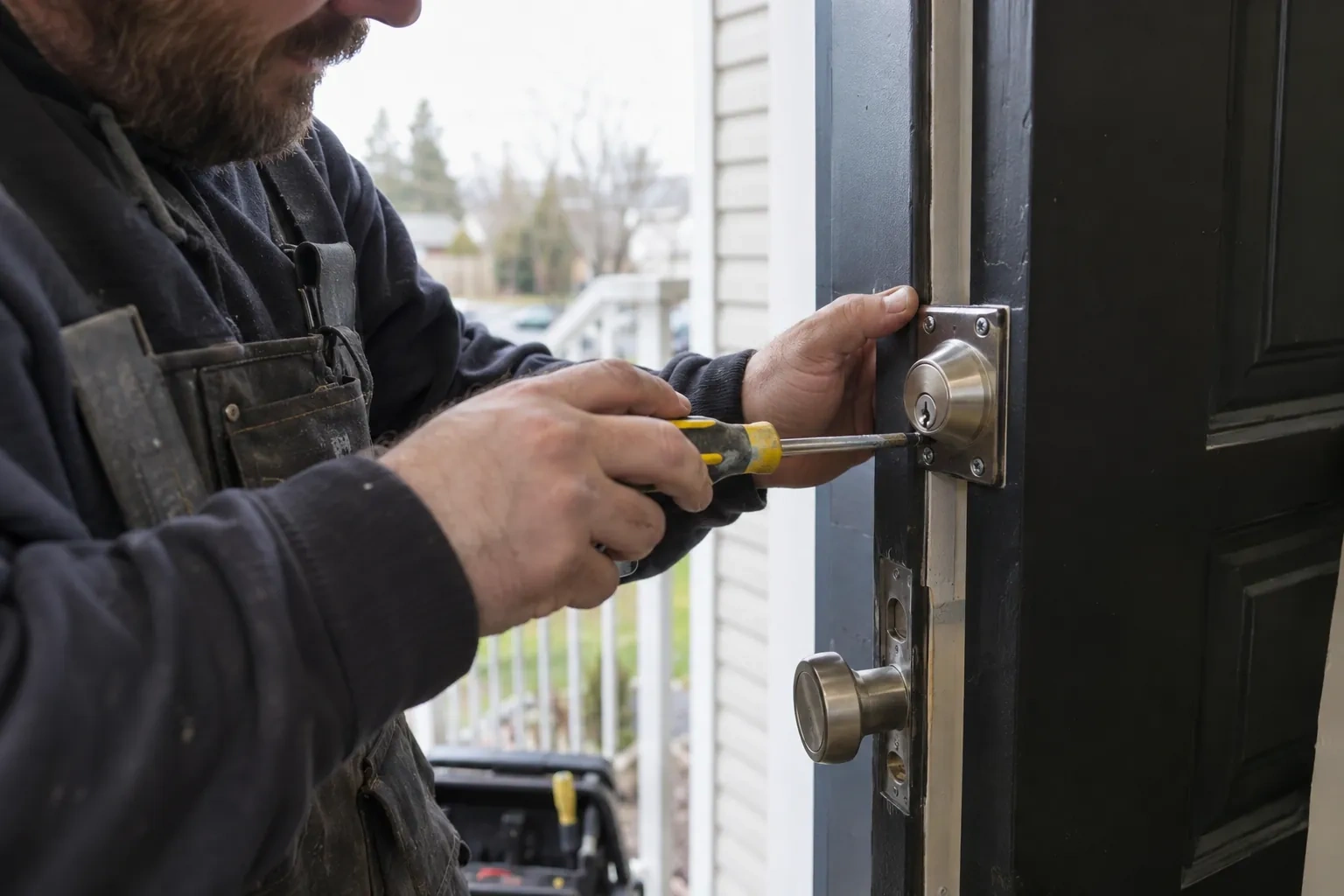
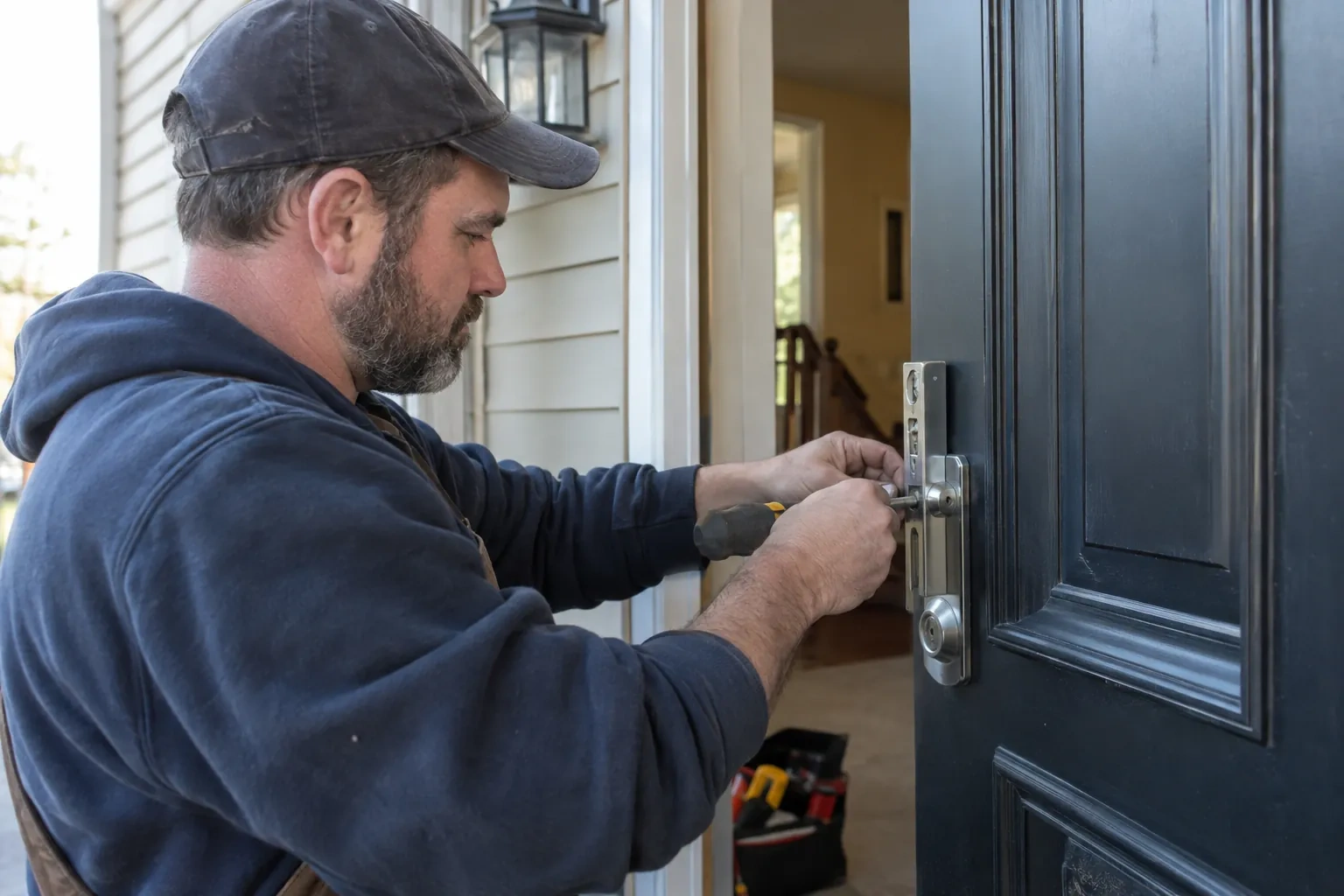
Each cylinder comes off in the way its lock allows, and the door itself is never cut or drilled. A knob or lever lock releases its cylinder once the knob is slipped off its spindle and a retaining clip or cap is eased back. A deadbolt cylinder comes out when the interior thumb-turn assembly is unscrewed and the housing lifts away. A mortise cylinder in an older door backs out after its small set screw is loosened, and a rim cylinder on a night latch unscrews from its back plate. Each piece is set aside with its own screws so the door goes back together exactly as it was.
Spares that live outside the house
A rekey is the natural moment to decide where the spare goes, because the one under the planter is the reason many of these calls happen. A key with a trusted neighbour or nearby relative is the simplest answer. A small combination lockbox fixed in a discreet spot, with the code shared only with the people on your list, is a step up and can be fitted before the locksmith leaves. For families with a keypad lock, a personal code for each member does the same job without a key at all. Whichever you pick, the spare is now a planned thing with a known home rather than a habit.
Lost Keys — Same-Visit Rekey
In the van
Rekeying pin kit
Key blanks in common keyways
Key gauge and decoder
Cylinder retaining-clip and cap tools
Plug follower set
Lost Keys — Same-Visit Rekey
What affects the quote
Travel to the property
Every call-out includes the drive. A house across town and a rural property at the end of a concession road involve different time on the road, and the quote reflects the trip.
Upgrades chosen during the visit
Some people take the moment to move to a heavier deadbolt, a restricted keyway, a reinforced strike or a lockbox for the spare. None of it is required; each option is a separate line.
Paperwork for a landlord or building
Where a landlord, condominium or lease requires a written record of the lock change and key count, preparing that note and any key register update is a small named item.
What to have ready
- Which doors did the missing key open: front, back, side, garage, shed, gate?
- Is the property a condo or apartment with shared entrance doors?
- Have any of the locks been stiff, sticky or hard to turn lately?
Lost Keys — Same-Visit Rekey: questions
QuestionsMy key fell in the snow in my own yard. Do I still need to rekey?
It is your call, and it is a reasonable one either way. A key lost on your own property is unlikely to be picked up by a stranger, but it will surface in the spring thaw, and until then you are trusting a guess about where it lies. Many households rekey anyway for the certainty, and because the visit also lets them put every door on one key while the locksmith is there.
How many new keys should I ask for?
Count the people who genuinely need one and add one for a known spare location: each adult, a teenager, a caregiver or regular sitter, the neighbour who checks the house, the landlord if you rent. Keys are cut on site, so the number is easy to settle during the visit. Fewer keys with names attached is the point; another can always be cut later from the code.
A garage door remote was on the ring. What happens with that?
The opener on the garage ceiling holds a memory of every remote paired to it, and it can be erased in one step so the lost remote is forgotten. The remotes still in the household are paired again afterwards, and a keypad on the outside of the garage gets a new code if you have one. The locksmith can do this during the visit, and it takes only a few minutes at the opener.
Related services
- Business Lockout ServiceMinus eighteen with a wind, and the exterior cylinder on the shop door has frozen solid overnight after yesterday's slush.
- Broken Key ExtractionYou were locking up on the way out when the key broke in the lock.
- Break-In Damage Lock RepairThe patio slider is sitting crooked on its track.