High security · Richmond Hill
High Security Locks
After the attempted break-in the police officer pointed at your door and said the strike plate was held by two short screws.
In plain words
Most break-ins do not involve picking; they involve a boot, a pry bar or a key that should never have been copied. High security hardware answers all three. A deadbolt with a full one-inch throw and a hardened core resists sawing and kicking, a reinforced strike with three-inch screws keeps the jamb whole, and a patented keyway means a copy can only be made through the locksmith who holds your system. The pick, bump and drill resistance of the cylinder is the layer on top. The locksmith's job is to fit those layers to your particular door and your particular worries.
How the visit goesThe restricted keys you bought years ago are no longer restricted; the locksmith mentioned the patent has run out and blanks are sold openly. Your key control quietly stopped being control.
High Security Locks
How the visit goes
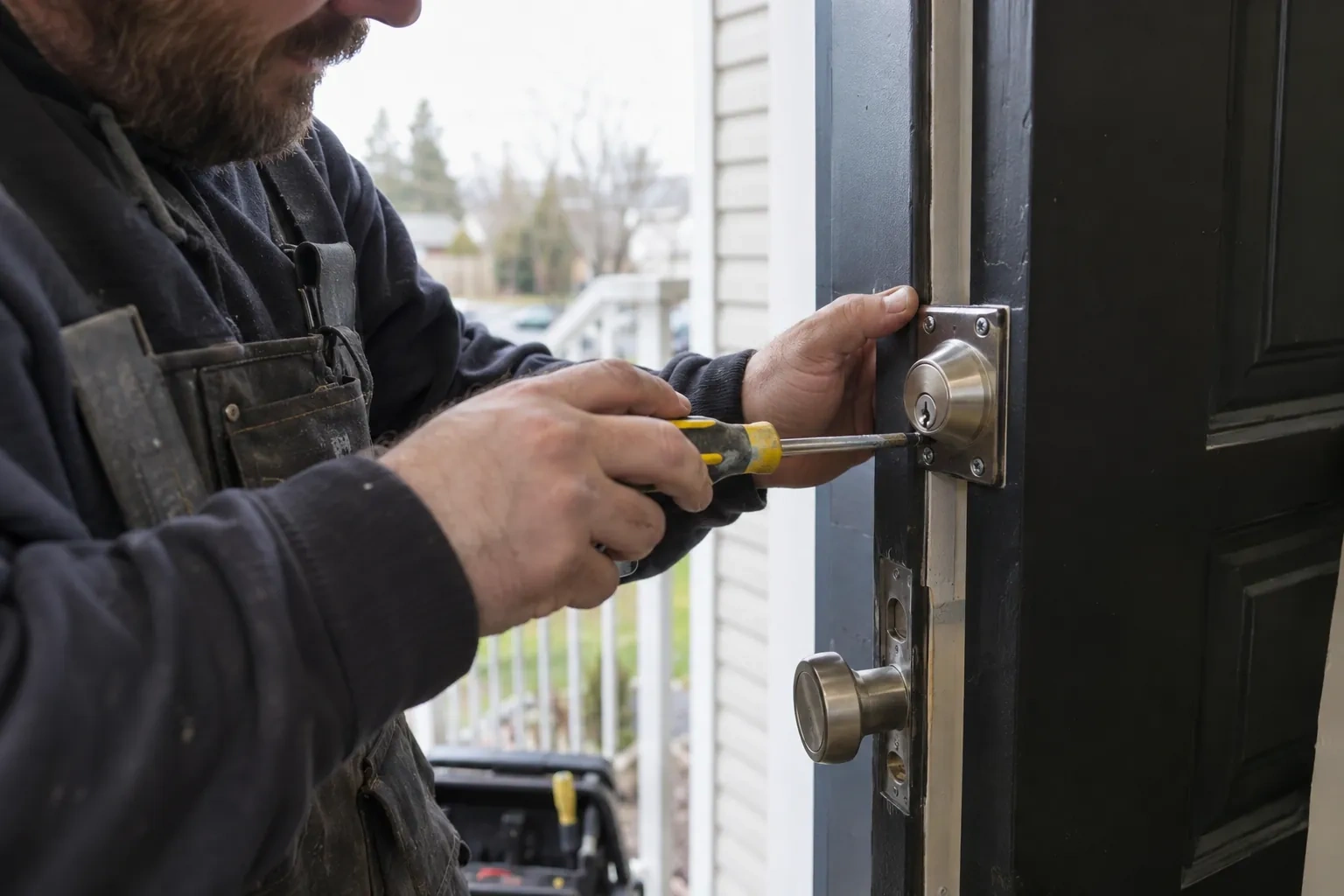
The bolt, the pocket and the strike
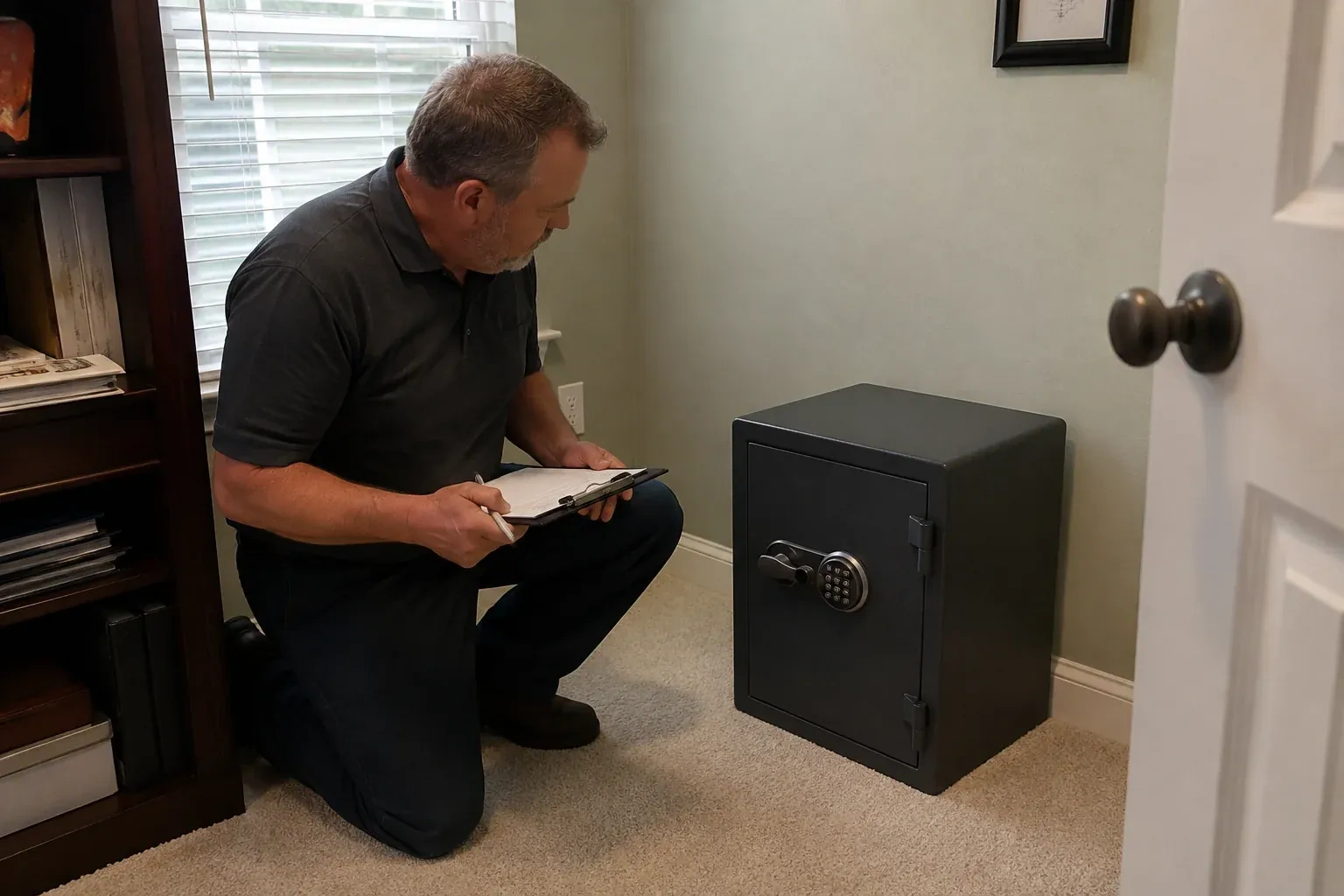
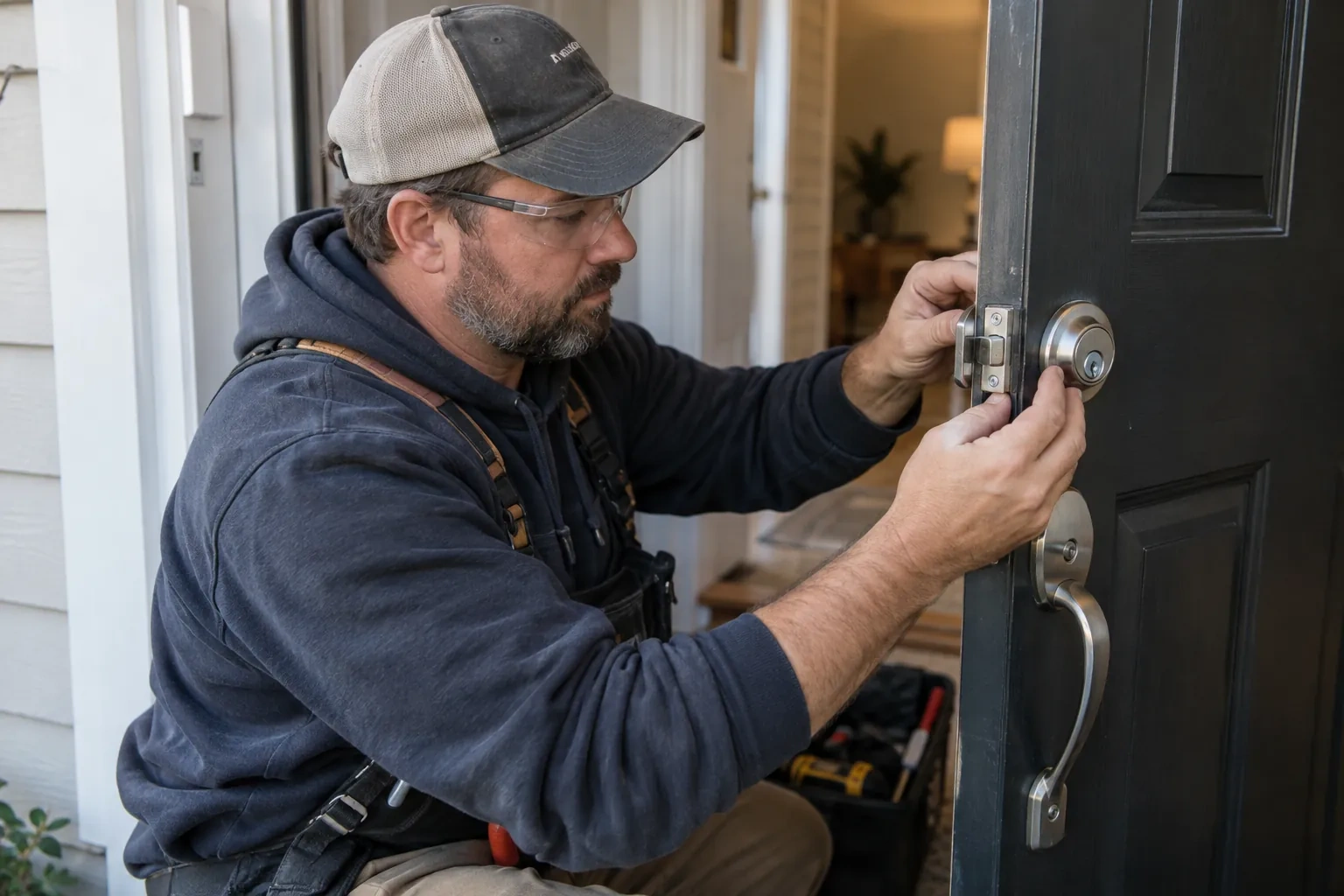
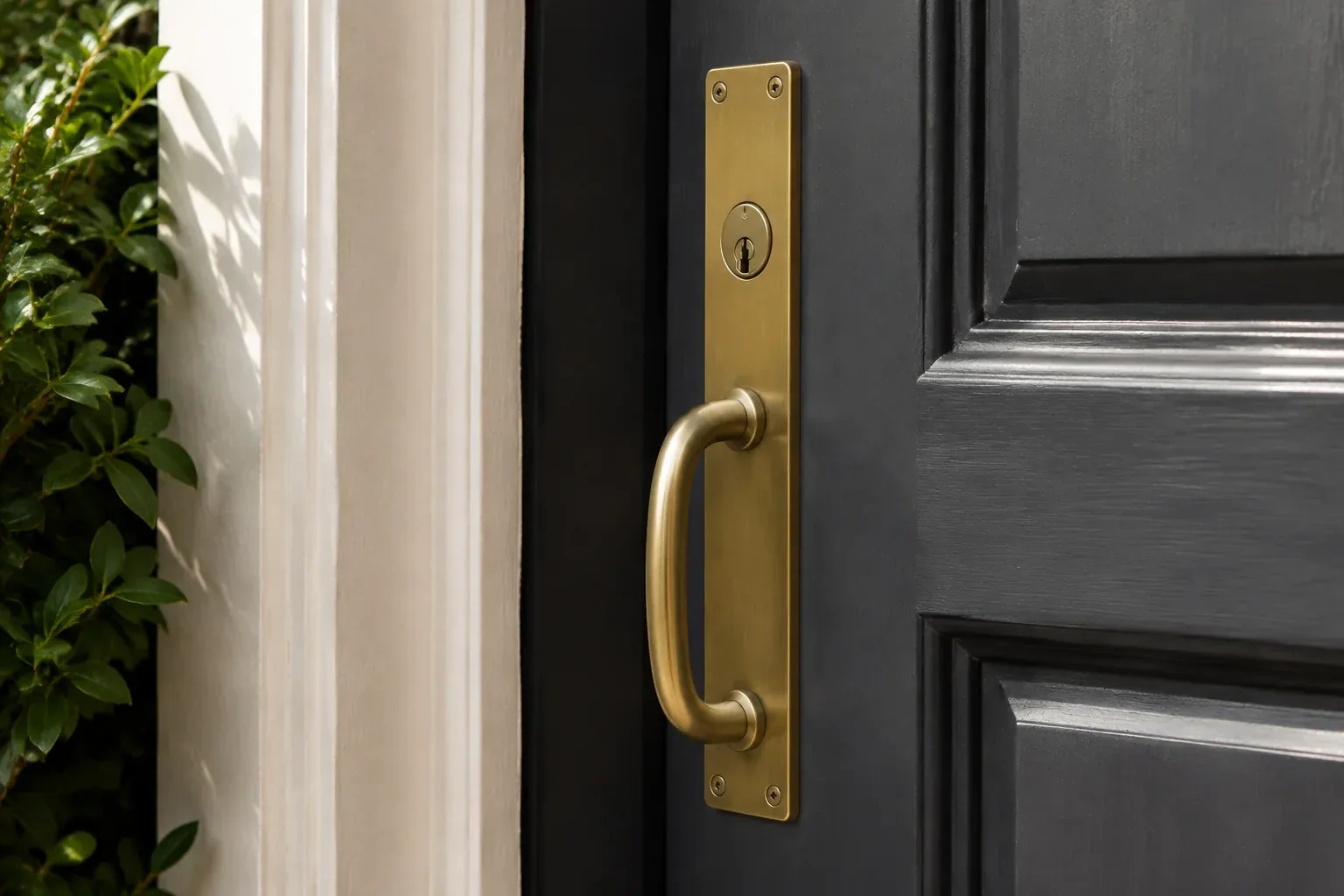
A deadbolt is only as good as how far it reaches and what it reaches into. The locksmith measures the throw of the bolt with the door closed, checks that it fully extends without the door being lifted or pushed, and looks at the pocket it enters in the jamb. A shallow pocket, a stamped strike plate and screws barely longer than a thumbnail are the usual finding on a builder-grade door. Then the frame is examined for splits, soft wood and gaps behind the jamb, since a kick lands on the strike, not on the cylinder.
Setting up controlled keys
The key system is registered to you before the first key is cut. The locksmith records the system, the authorised signatories and the number of keys issued, and hands you the authorisation card or online validation details. Every key is cut from code rather than copied, because the angled cuts or side milling must be exact for the sidebar to release. Extra keys later are ordered by an authorised person and logged, and blanks are not sold outside the manufacturer's network. This is what makes a key stop being a thing anyone can duplicate at a kiosk.
A key plan that survives staff changes
For a business, the handover includes a key schedule showing every cylinder, every key number and who holds it. When someone leaves, their key comes back and is struck off; if it does not come back, you know exactly which doors it opened and can decide whether one cylinder or several should be repinned. Because the keyway is restricted, a departed employee cannot quietly keep a copy. New hires are issued a numbered key against a signature. The plan lives in a folder or spreadsheet, and the locksmith keeps a matching record so the two can be reconciled whenever you like.
High Security Locks
In the van
Reinforced strike plate
Graded deadbolt with hardened bolt
Patented key blanks
Pinning kit and plug follower
Commercial mortise lock body
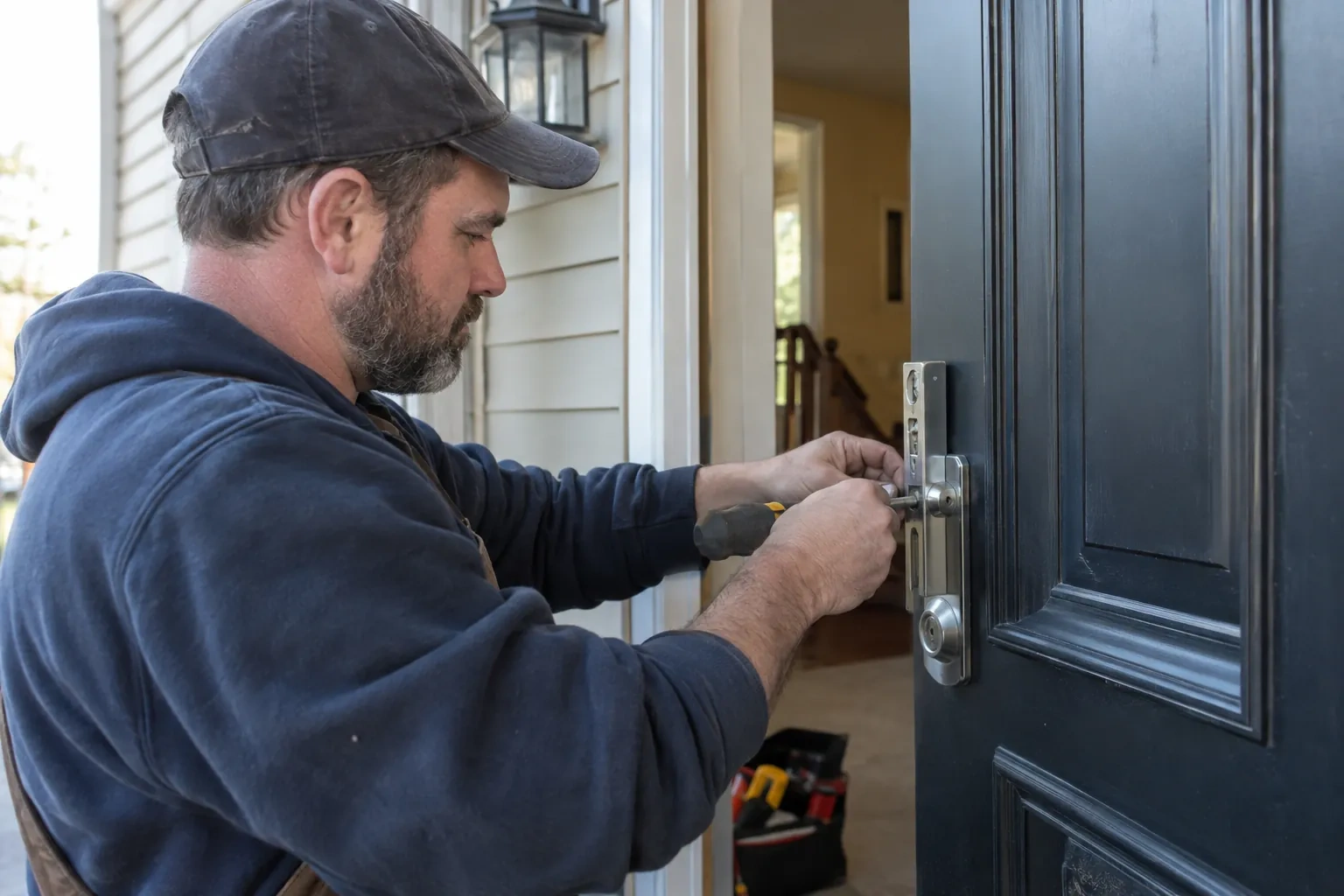
High Security Locks
What affects the quote
Commercial lock bodies
Heavy-duty deadbolts, mortise locks, narrow-stile deadlocks and cylinder guards for storefront and warehouse doors are heavier hardware than residential deadbolts and priced as such.
Number of keys cut
Every key is cut from code on a machine that handles side bitting or angled cuts, so the count of keys you want at handover is a real line rather than a rounding error.
Hinge and door edge work
Long hinge screws, a hinge-side security stud or repair to a chewed door edge are small items that add up on a door that has been forced before.
What to have ready
- Does the door drag, stick in cold weather or need lifting to lock?
- Is the door wood, steel-clad, fibreglass or aluminium with glass?
- How many keys exist today, and are you confident of that number?
High Security Locks: questions
QuestionsCan a hardware store or kiosk copy my new key?
No. The blank for a patented keyway is distributed only through the manufacturer's network to locksmiths who hold the system, and the side milling or angled cuts need a machine set up for that line. A kiosk would have neither the blank nor the cut. Extra keys come through your locksmith, cut from code, once an authorised person has approved the order. That routine is a small inconvenience compared with never knowing who has a copy.
Do I need to replace my whole deadbolt or just the cylinder?
It depends on what you have. If the deadbolt is a good heavy unit that throws a full inch into a proper strike, a high security cylinder can replace the ordinary one and the rest stays. If the deadbolt is light, worn or throws a short bolt, a new graded deadbolt with a hardened bolt is the sensible base and the high security cylinder goes into that. The assessment tells you which, door by door.
Can a high security cylinder be rekeyed later?
Yes. Like any pin tumbler it can be repinned to a new combination by a locksmith who holds the system, so a departed employee's key can be retired without replacing hardware. Some lines use interchangeable cores that swap in moments with a control key, which suits businesses with frequent turnover. Rekeying stays within your registered keyway, so the key control you paid for continues after the change.