Change or rekey · Richmond Hill
Lock Rekeying
Your basement tenant has given notice, and a new one arrives on the first.
In plain words
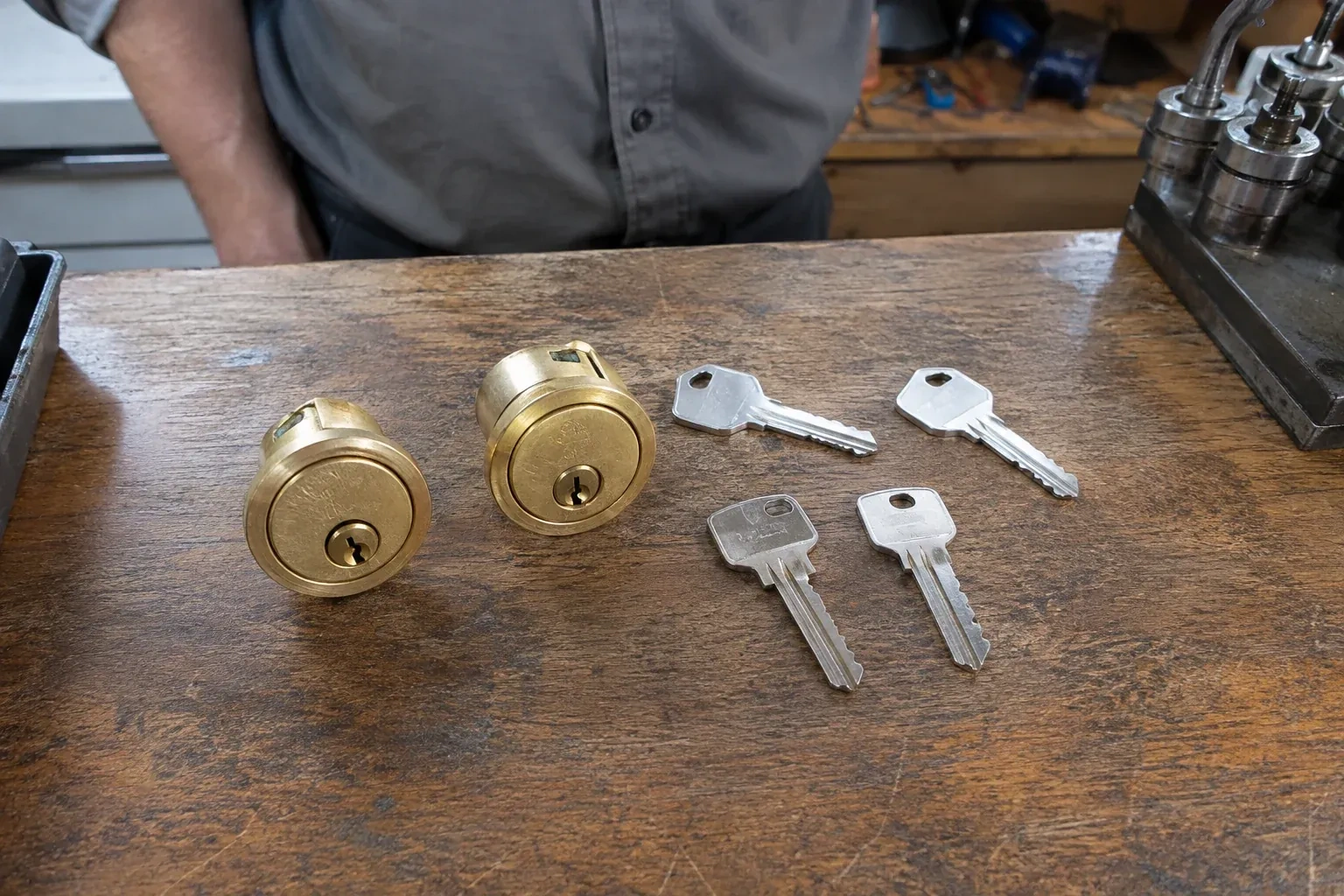
The choice between rekeying and replacing comes down to the condition of the lock and what you want from it. A cylinder that turns smoothly, sits firmly in a solid deadbolt and matches the look of the door is worth keeping, and rekeying gives it a new key for a fraction of the effort of replacement. Replacement earns its place when the hardware is worn, low grade, damaged, a mismatched keyway that cannot join the house key, or when you want a keypad or a heavier deadbolt anyway. A locksmith looks at each door and tells you which one applies.
How the visit goesThe previous owners left a coffee tin of keys on the counter, some labelled, most not. The house is yours now, but you have no idea how many copies were cut over the years or who still has one in a drawer somewhere.
Inside the lock
What a rekey changes
01
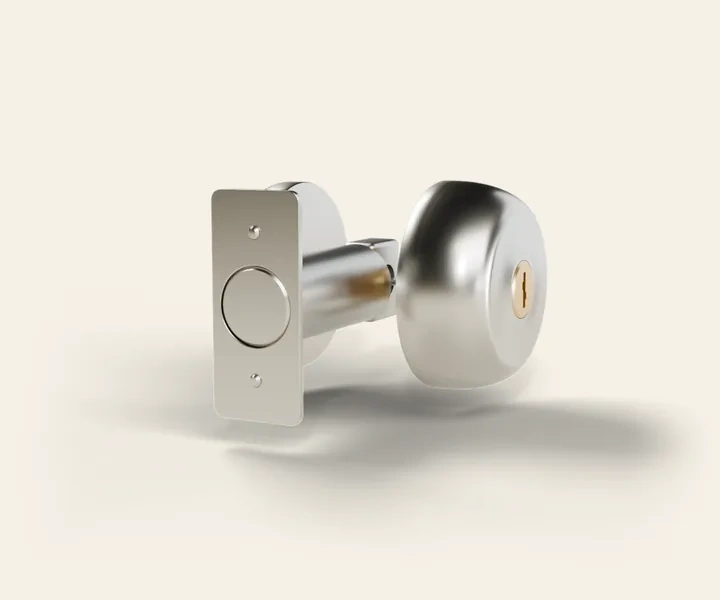
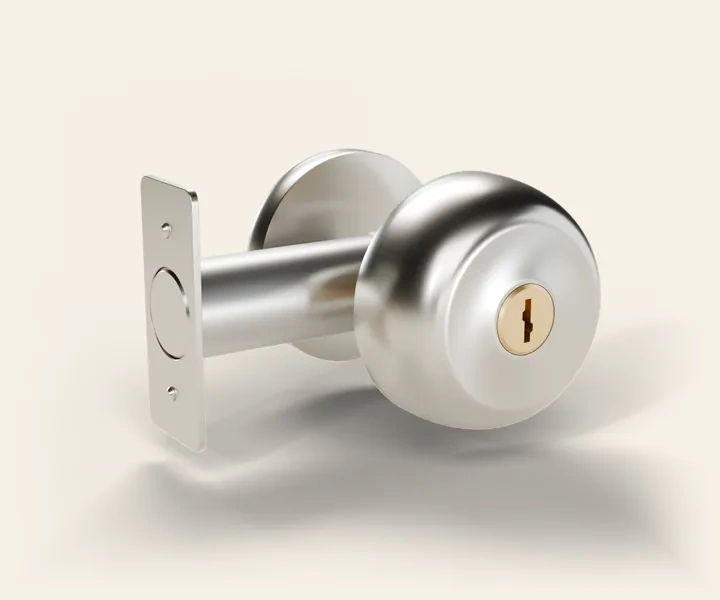
The lock you already have
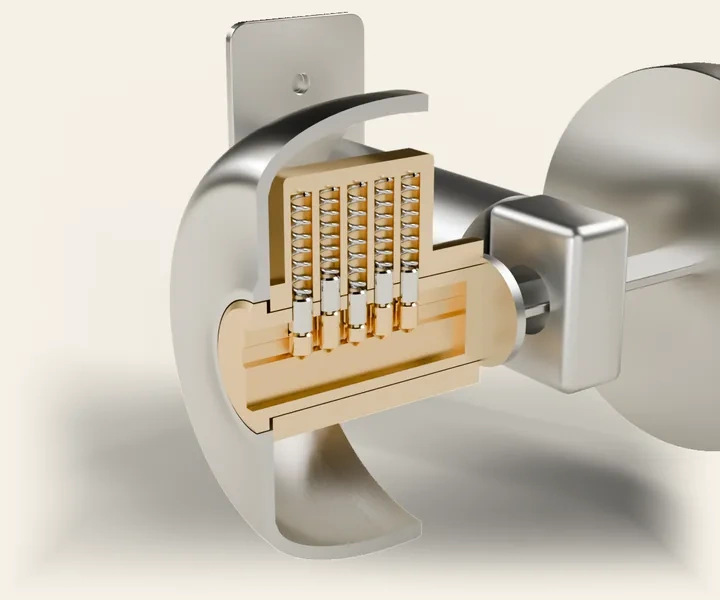
02
Inside the cylinder
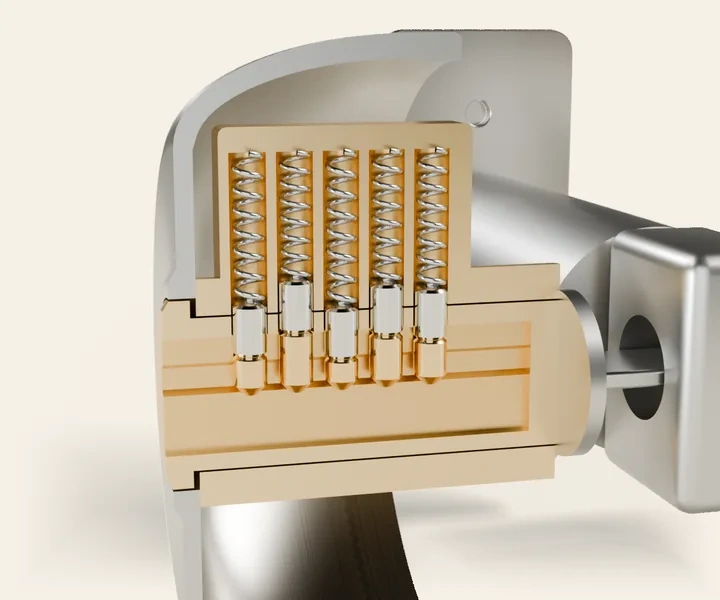
03
Pins, springs and the shear line
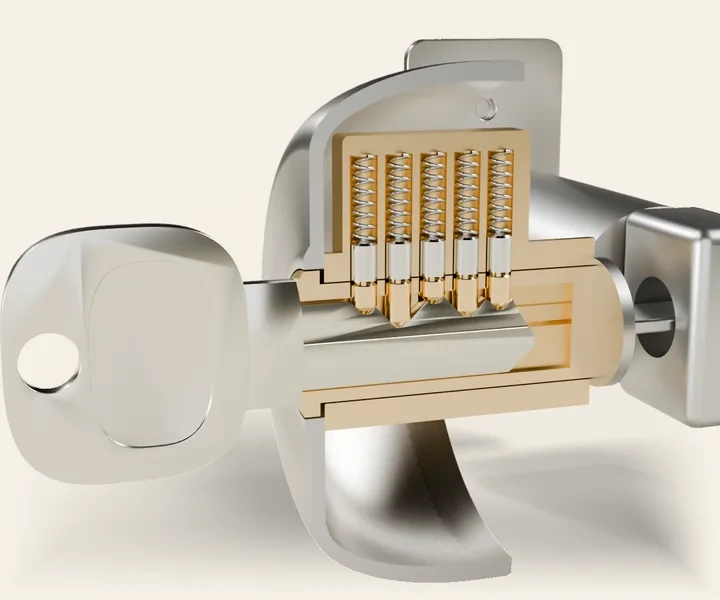
04
A new key, new pins
Lock Rekeying
How the visit goes
Smart locks and user-rekeyable cylinders
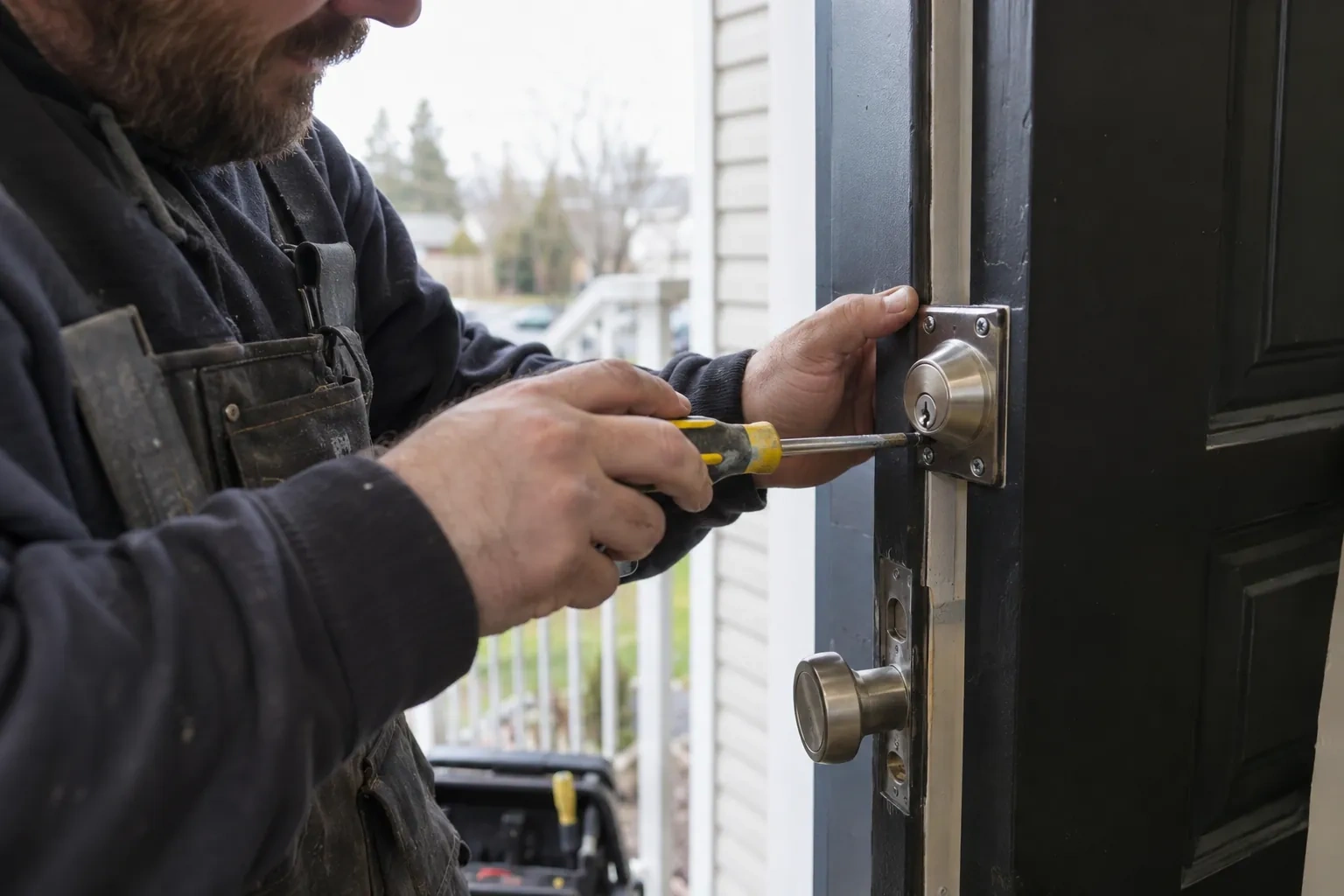
Modern hardware gets its own look. Many keypad or app-controlled deadbolts have a conventional override cylinder behind a cover that can be rekeyed to the house key so the backup key is not a stranger on your ring, though some models are key-free and use an external battery backup instead. Some residential cylinders are designed to be reset by the owner with a small tool and a working key; the locksmith checks whether one has been reset correctly and whether it accepts the new key. Where a smart lock is being kept, codes are reviewed at the same time so a departed keyholder's code goes the way of their key.
Proving the old keys are finished
The last operation at every door is the test that matters most. The locksmith turns the new key from outside and inside with the door open, then closed, and confirms the bolt throws fully and draws back cleanly. Then the old key is tried in the same cylinder and must turn nothing. This is repeated at every rekeyed door, because the door that gets skipped is the one an old key still opens. Spares cut from the new pinning are tried in every lock they are meant for. The old keys, now just shaped brass, are collected or handed back to you for the recycling bin.
New keys, counted and tried in every door
You finish the visit holding the only keys that work, and you know exactly how many there are. The locksmith cuts the agreed number from the fresh pinning rather than copying one from another, so each is as true as the first, and tries every one in every door it should open before handing them over. Count them, decide who in the household gets one, and put the spare somewhere you will remember. If a door was left on a separate key on purpose, that key is tagged so it does not get mixed into the house set. The whole set fits comfortably on one ring.
Lock Rekeying
In the van
Code cutter or key duplicator
Graded bottom pin kit
Key blanks
Replacement cylinder for odd keyways
Retaining clip tool
Lock Rekeying
What affects the quote
Mismatched keyways needing a cylinder swap
Where one door's cylinder cannot take the key the other doors share, a compatible replacement cylinder is fitted and pinned to match, and that hardware appears as its own line in the quote.
One key group or several
Keying every door alike is the simplest plan. Setting up separate keys for a basement suite, an office or a shed adds a group to pin and label, and the quote shows that as separate work.
Condition of the existing cylinders
A clean cylinder is repinned as it is. One with collapsed springs, a plug packed with old oil or a worn housing needs service or replacement while it is apart, and that shows separately.
What to have ready
- Are any of the locks keypad or smart locks with a backup key?
- Is there a shed, gate, mailbox or padlock you would like on the same key?
- Is there a basement suite or office that should keep its own key?
Lock Rekeying: questions
QuestionsHow is rekeying different from replacing the lock?
Rekeying keeps your existing deadbolt or handle set and gives it a new key, commonly by changing the pins inside, though some cylinders reset a different way. Replacing removes the whole lock or cylinder and fits new hardware. Rekeying suits locks that are in good condition and simply need a fresh key. Replacement is the better call for hardware that is worn or damaged, built to a low grade, on a keyway the other doors cannot share, or due for a change of style or a keypad.
My locks are different brands. Is that a problem?
Not a problem, just a detail to plan around. What matters is the keyway, meaning the profile of the slot the key fits, rather than the name on the lock. Different makers sometimes share a profile and sometimes do not. Where two cylinders cannot accept the same key, one is exchanged for a compatible cylinder in the same finish and pinned to match. From the outside the door looks the same and from your pocket it is one key.
One of my locks is stiff and worn. Can it still be rekeyed?
Often the stiffness is grit, old oil and tired springs rather than real wear, and those are handled while the cylinder is on the bench: the plug is cleaned, new springs go in with the new pins, and a dry lubricant finishes it. If the plug has worn oval or the housing is damaged, the locksmith shows you and suggests a replacement cylinder pinned to the same key, rather than fresh pins in a lock that will keep dragging.
Related services
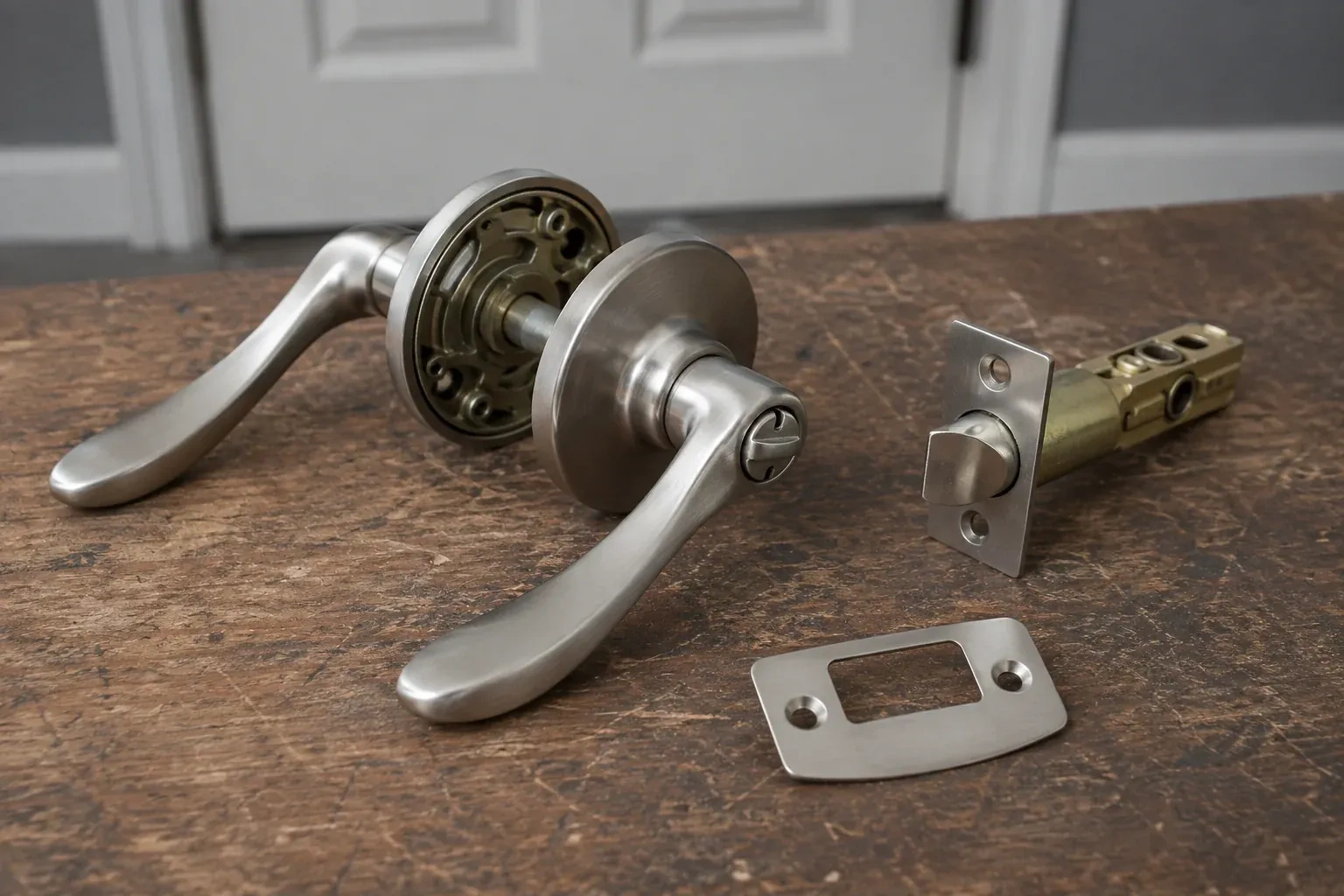
- Lock Replacement & UpgradeThe century home's original mortise lock takes a key the size of a spoon, sticks in humid weather and has worn its strike to a groove.
- Vintage Mortise Lock ServiceThe old skeleton key still fits the keyhole, but it now needs a jiggle, a lean on the door and a little luck before the bolt moves.
- Smart Lock InstallationArthritis has made the small house key hard to grip and turn, especially with gloves on in January.