Commercial
Commercial Locks
A commercial key plan should survive the person who set it up. We leave a written schedule of which key opens which door and who holds what, so a new manager inherits a system rather than a mystery.
Which one do I need?
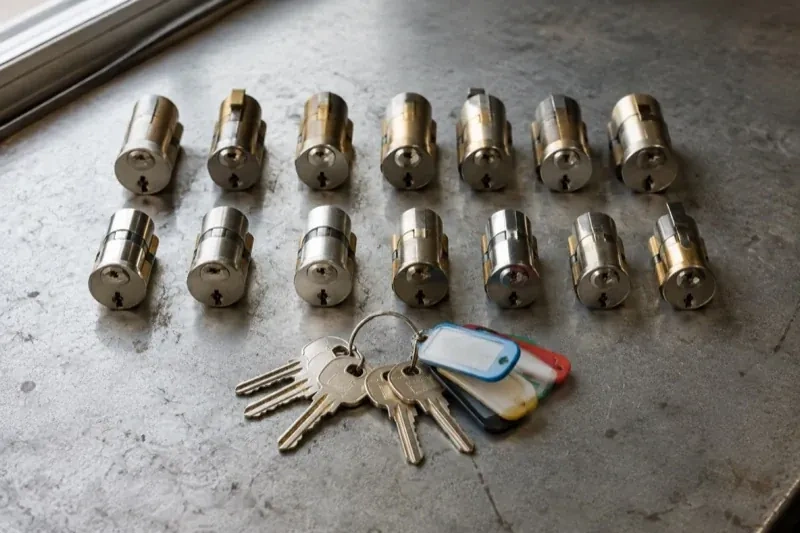
- Two people left over the summer and the keys they handed back came up one short.Commercial Rekeying
- The new wing was built with its own brand of cylinder, so the two-year-old keys from the original building do not open a single door in the addition.Master Key System Design
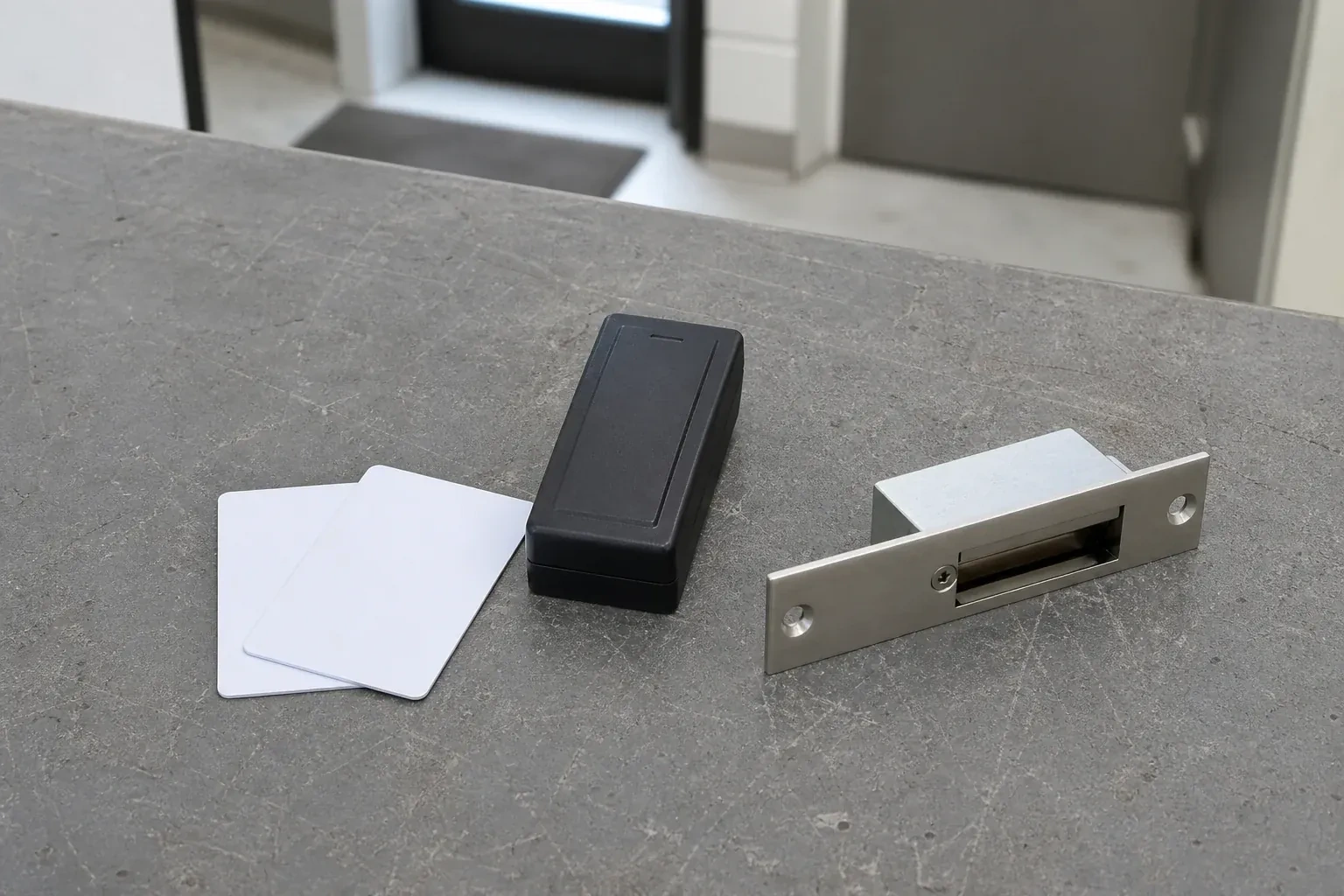
- Deliveries arrive before anyone is scheduled to be there, which right now means either propping the loading dock open at dawn or handing a key to a driver you have never met.Access Control Installation
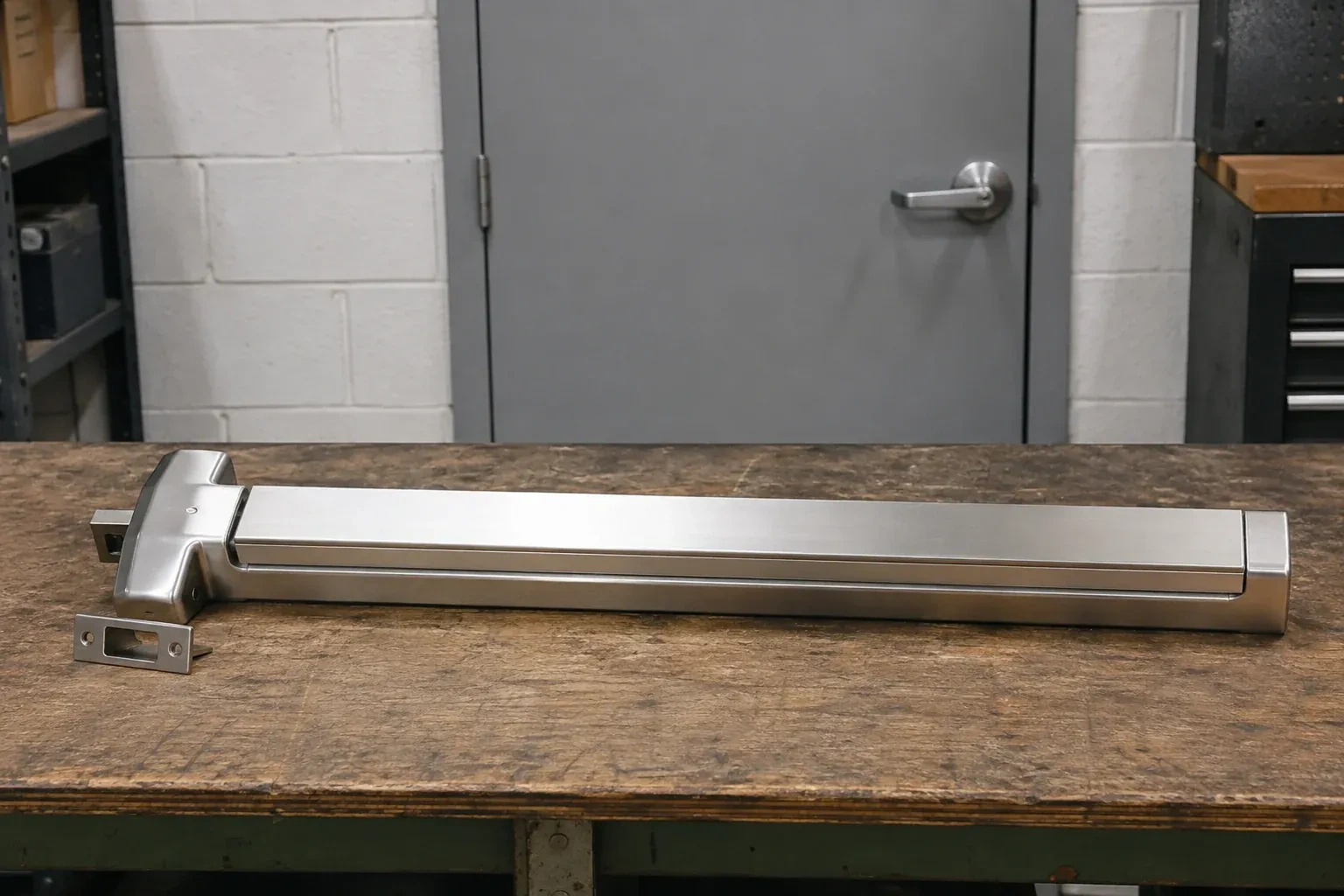
- Someone at the front counter always has to unlock the side door by hand before the lunch rush, because the round doorknob out there was never meant to be an exit for a room this size.Panic & Exit Hardware
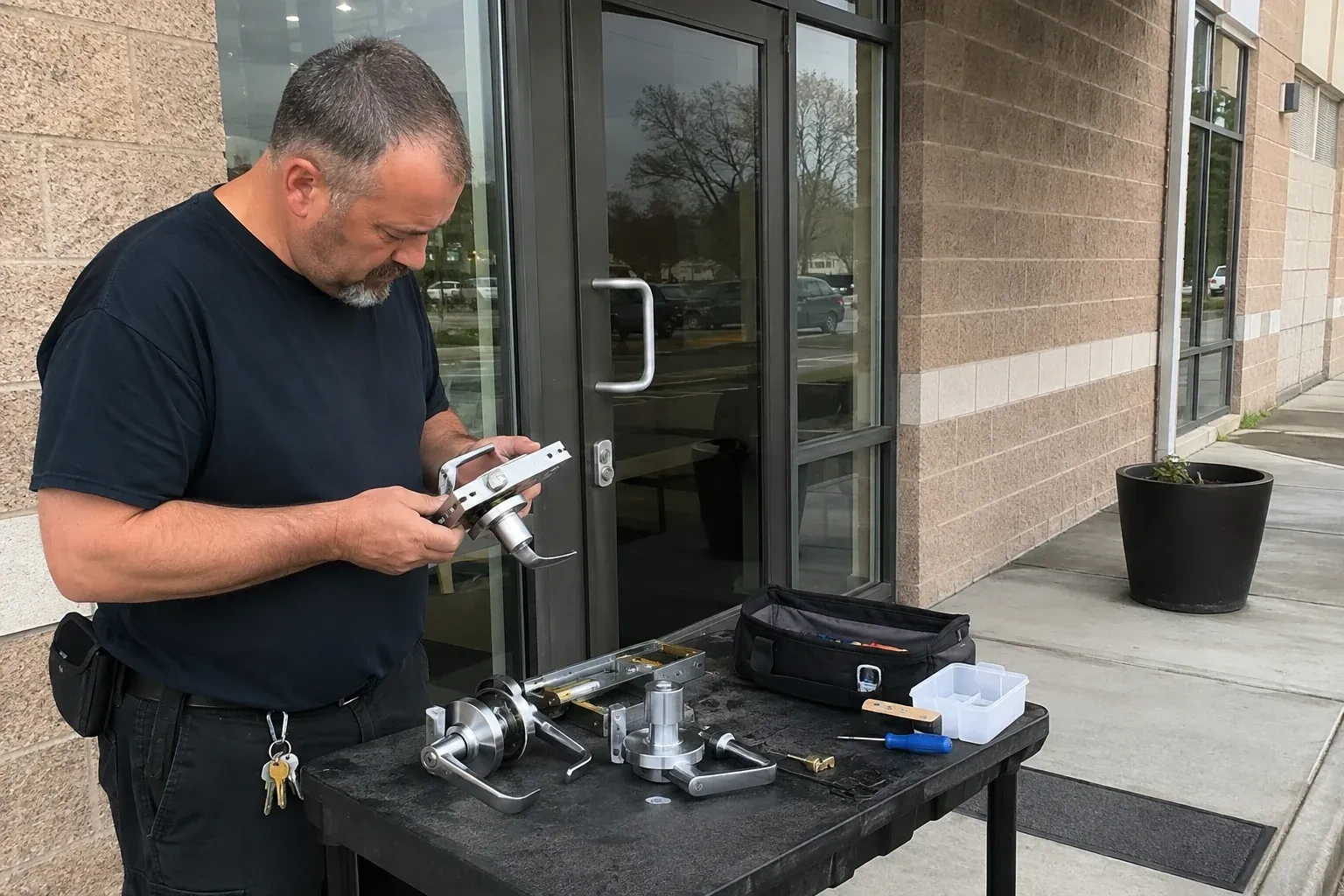
- The kitchen delivery door gets shouldered open more than a hundred times a shift, and lately the latch slips past the strike plate instead of catching it on the first push.Commercial-Grade Lock Replacement
Commercial Locks
Locks for shops, offices and buildings: rekeying at turnover, commercial-grade hardware, exit devices, master key systems and access control.

Commercial Rekeying
Choosing the window and the order of doors
The last part of the assessment is practical: when can the work happen, and in what order. A retail shop may prefer the hour after closing; a restaurant, the mid-morning lull; a warehouse, the gap between the last outbound truck and the night shift. The locksmith also asks about deliveries, the cleaning crew, the alarm monitoring company and anyone else who holds a key and needs a new one before their next visit.
From this comes a sequence, typically the doors staff use least first and the main entrance last, so there is always a working, lockable way in and out while the cylinders are being changed.