Lockouts · Richmond Hill
Break-In Damage Lock Repair
The patio slider is sitting crooked on its track.
In plain words
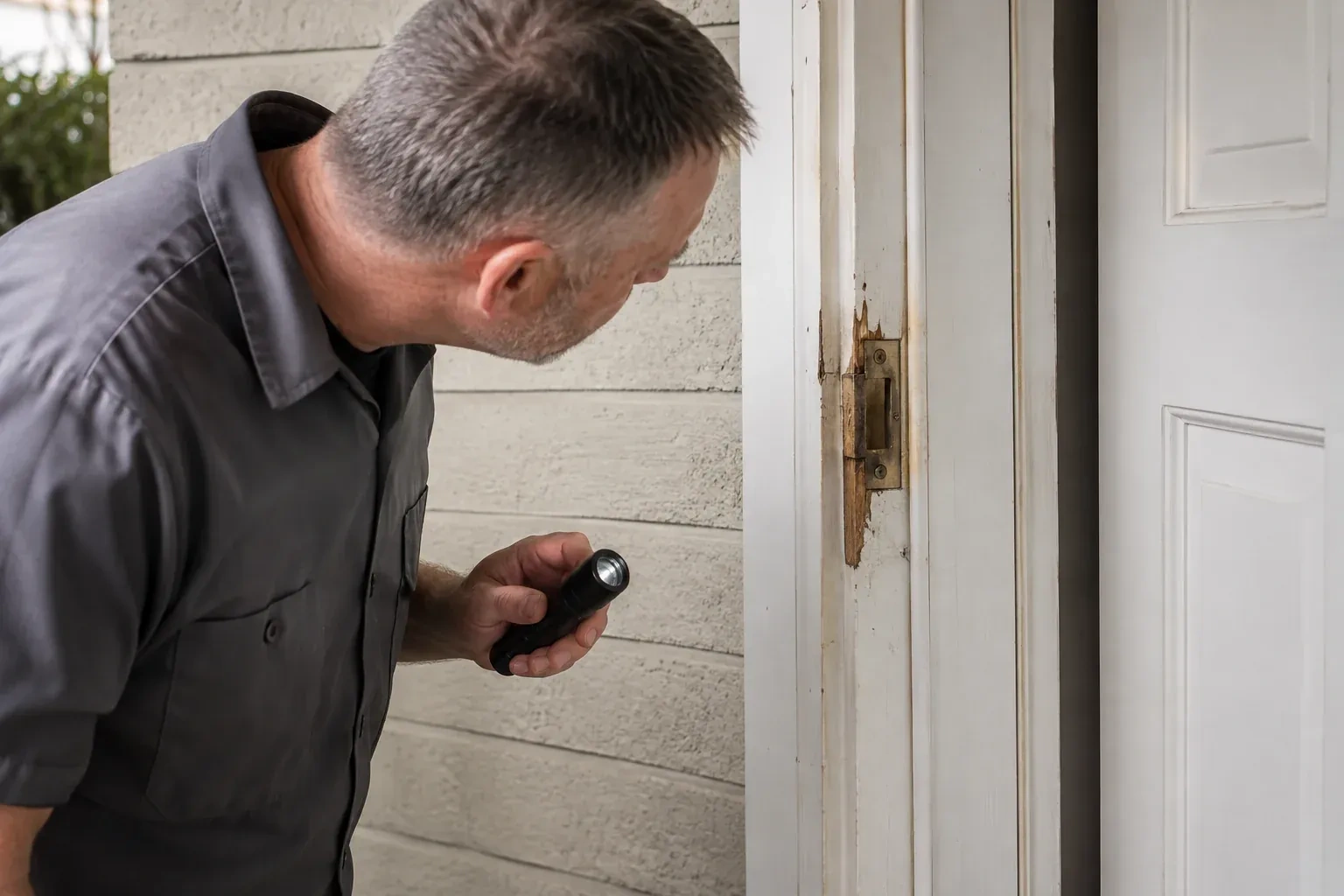
A failed break-in is still a repair. When a lock holds against a pry bar or a kick, the force goes somewhere: a strike plate bends, screws loosen, the door edge takes a gouge, the deadbolt binds where the bolt met the strike under load. Left alone, that door locks a little worse each week and the next attempt starts from where the first one finished. The visit checks every part that took the strain, replaces what bent, reinforces the strike and hinges with long screws and confirms the bolt throws cleanly again. It is also the moment to add what would have made the attempt pointless from the start.
How the visit goesPolice have come and gone, the occurrence number is on a sticky note, and you are standing in a cold hallway looking at a splintered frame, wondering how the house gets locked before everyone tries to sleep.
Break-In Damage Lock Repair
How the visit goes
How the door was attacked
The damage tells the story of the attack, and the story decides the repair. A kick leaves the strike torn out and the jamb split along the grain, often with the deadbolt still thrown and intact. A pry bar leaves a crushed door edge, a bent latch and marks in the weatherstrip gap. A wrench attack twists the cylinder out of its housing and may shear the tailpiece, leaving a bolt stuck in the frame. Broken glass beside the door means the lock was never defeated at all; an arm simply reached the thumb-turn. Each pattern points to a different weak point, so identifying it first keeps the repair aimed at what actually gave way.
Storefront and commercial doors
Aluminum storefront doors fail differently: the narrow stile bends under a pry bar, the hookbolt or deadlatch is forced, or the glass is broken. The locksmith straightens or replaces the stile section where possible, fits a new narrow-stile deadbolt or hookbolt with a matching strike, and adds a latch guard plate or an anti-pry astragal along the meeting edge so a bar has nothing to grip. Interchangeable cores are rekeyed and access codes reviewed with the owner. Where the door is part of an exit route, the inside hardware is kept as a single-motion release so the repair strengthens the entrance without changing how people leave.
Stronger than it was before
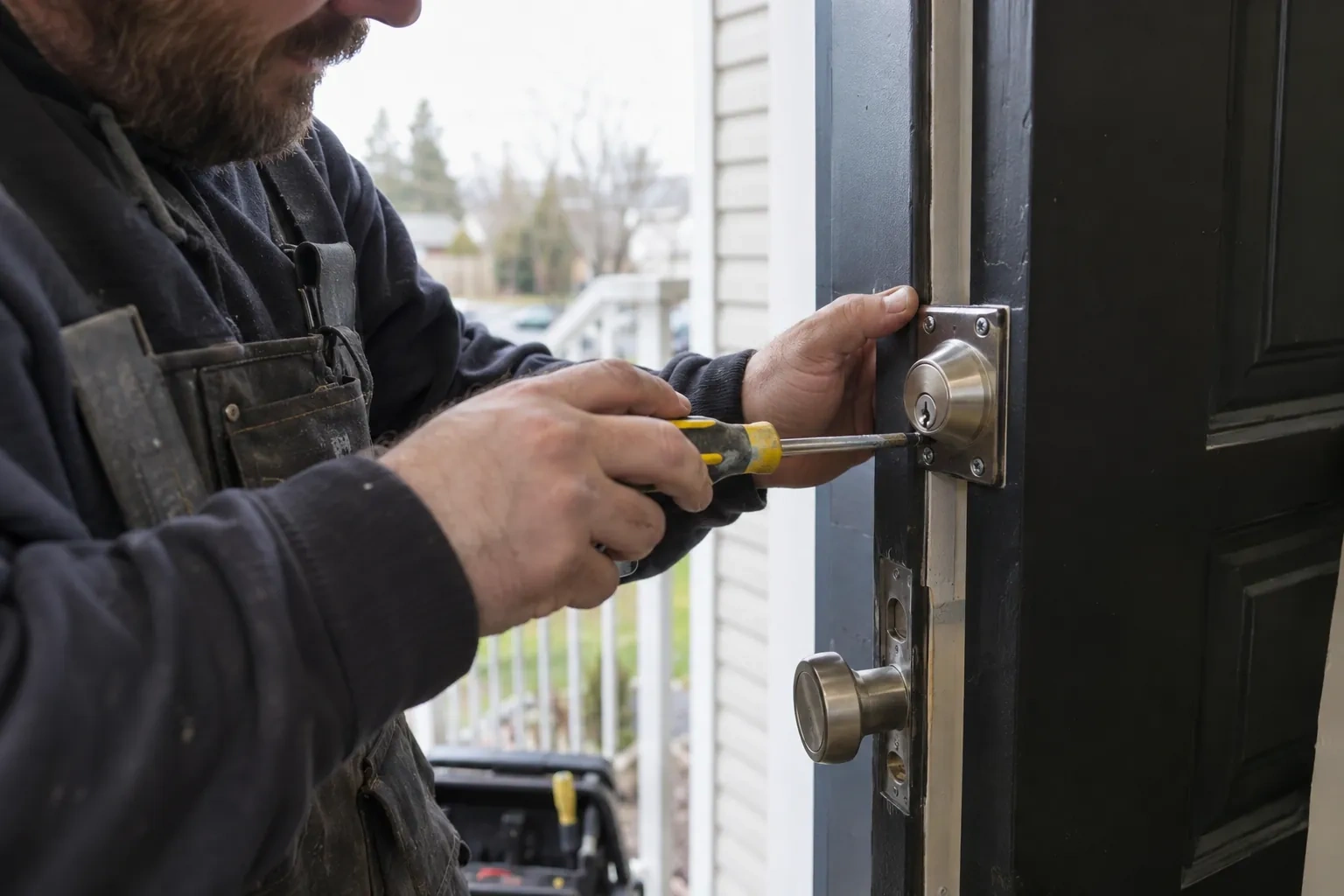
A repaired door is usually the strongest door in the house, because the parts that failed have been replaced with the parts that should have been there. The bolt now sits in a boxed strike anchored to the stud by long screws, the hinge side is fixed to framing rather than trim, the door edge is sleeved in steel where it was soft, and a full-throw deadbolt with a hardened insert has replaced the light one. None of this shows from the street. What changes is that a repeat attempt meets resistance at every point the first one found weak, and the noise and time that demands is exactly what intruders avoid.
Break-In Damage Lock Repair
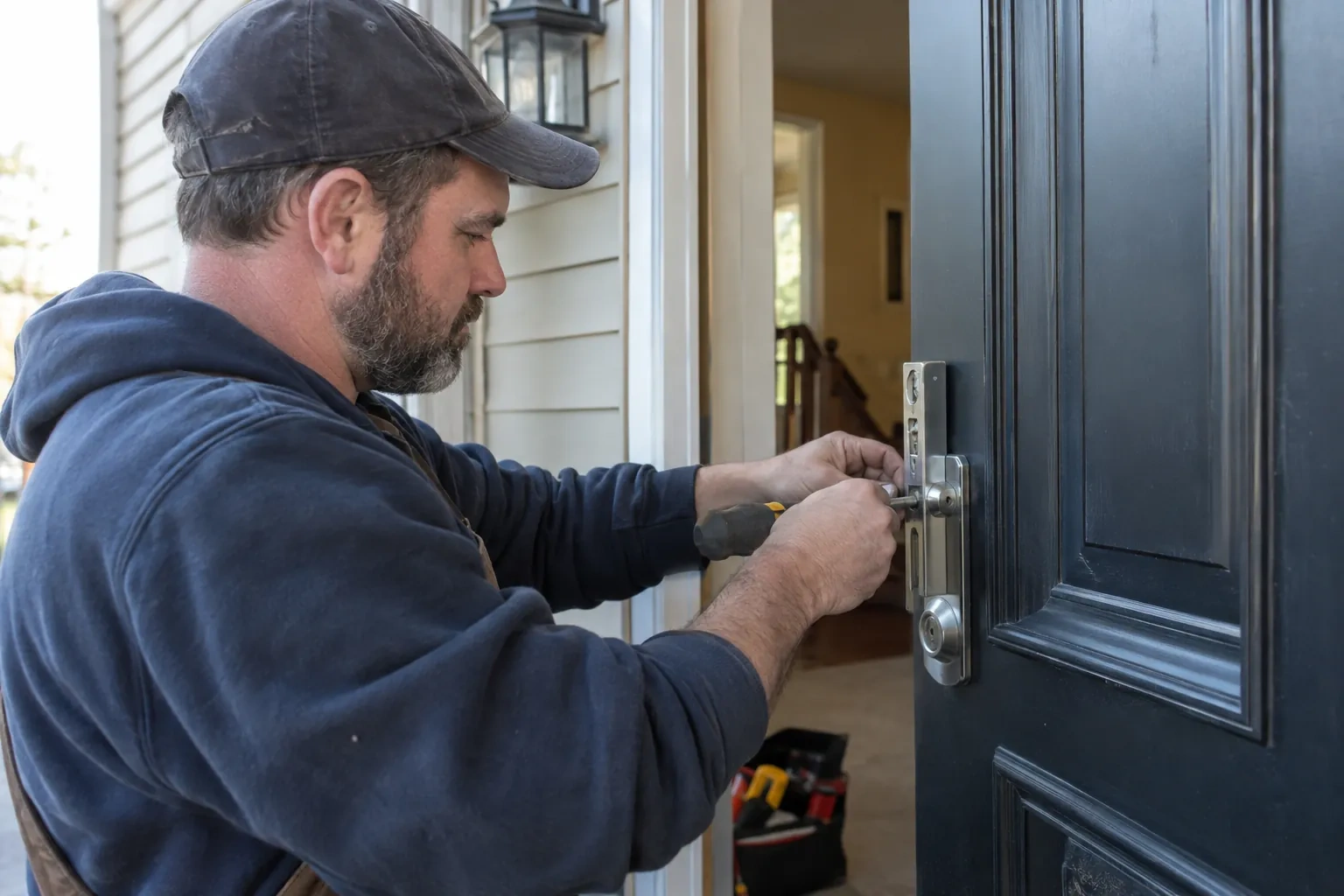
In the van
Wrap-around door edge reinforcer
Three-inch strike and hinge screws
Replacement cylinder or core
Two-part wood epoxy and shims
Latch guard plate
Break-In Damage Lock Repair
What affects the quote
How many parts were damaged
One broken cylinder on a sound frame is a small repair. A torn strike, a split jamb, a crushed door edge and bent hinges together are a longer visit with more hardware, and the quote follows the count.
Sliding door hardware
Putting a slider back on its track, replacing its latch and adding anti-lift blocks, a foot bolt or an auxiliary lock is a different parts list from a hinged door, and is quoted as such.
Hour of the call
Break-ins are discovered at all hours, and the amount for securing and repairing the damage is the same whatever hour that turns out to be. The locksmith confirms the exact figure on site once the extent of the damage has been assessed.
What to have ready
- Is this a suite door in an apartment or condo building?
- Have you photographed the damage as you found it?
- Were any keys, garage remotes or alarm codes taken?
Break-In Damage Lock Repair: questions
QuestionsWhat is a security strike box and why fit one?
A security strike is a heavier plate with a formed steel pocket that wraps around the bolt instead of leaving it in bare wood. It is set into the jamb and fixed with long screws, typically three inches, that pass through the jamb and the shim space into the framing, with the longest screws placed nearest the door stop where the bolt bears. Manufacturers specify the pocket depth so the bolt extends fully. The result spreads a kick across the wall stud rather than two small screws.
My condo entry door is a fire-rated door. Does that change the repair?
Yes, in a good way. A suite door that opens onto a corridor is meant to close and latch on its own every time, so the repair uses hardware suited to a labelled fire door, keeps the self-closing device adjusted and operating, and adds no holes or plates the label does not allow. The building's manager is normally involved, and the locksmith works with the door's rating rather than around it.
Why did the frame break instead of the lock?
Because that is where the weak point was. A standard strike plate is held by two short screws in a soft wood jamb, and the deadbolt only reaches into a shallow pocket behind it. A kick delivers the full weight of a body to those screws, and the wood around them splits along the grain. The bolt itself is rarely the failure. That is why the repair concentrates on the strike side: a boxed strike, a full-depth pocket and long screws into the stud.
Related services
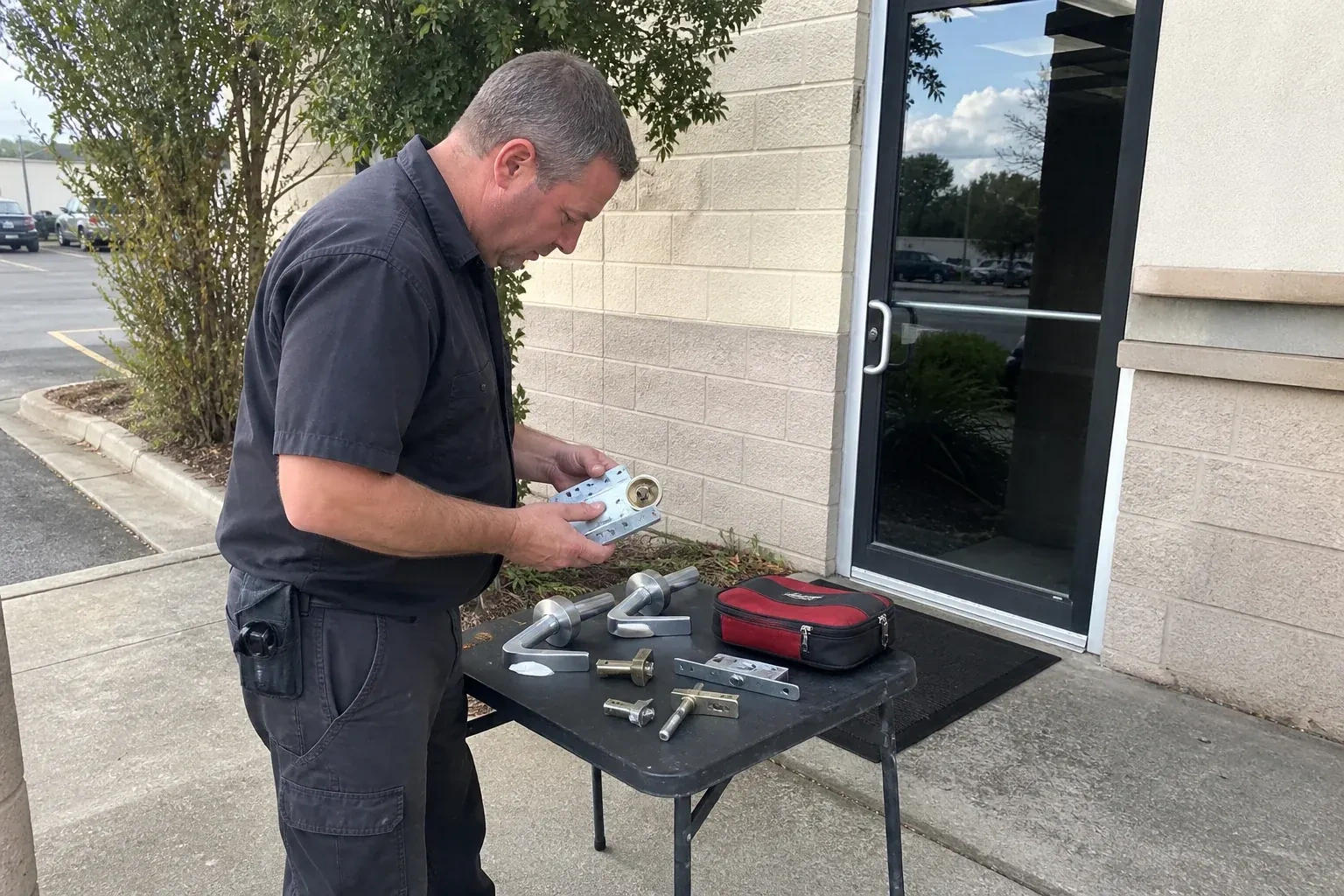
- Business Lockout ServiceMinus eighteen with a wind, and the exterior cylinder on the shop door has frozen solid overnight after yesterday's slush.
- Broken Key ExtractionYou were locking up on the way out when the key broke in the lock.
- Seized & Jammed Lock OpeningThe key slides all the way in, exactly as it has for years, and then refuses to turn in either direction.