Commercial · Richmond Hill
Access Control Installation
Deliveries arrive before anyone is scheduled to be there, which right now means either propping the loading dock open at dawn or handing a key to a driver you have never met.
In plain words
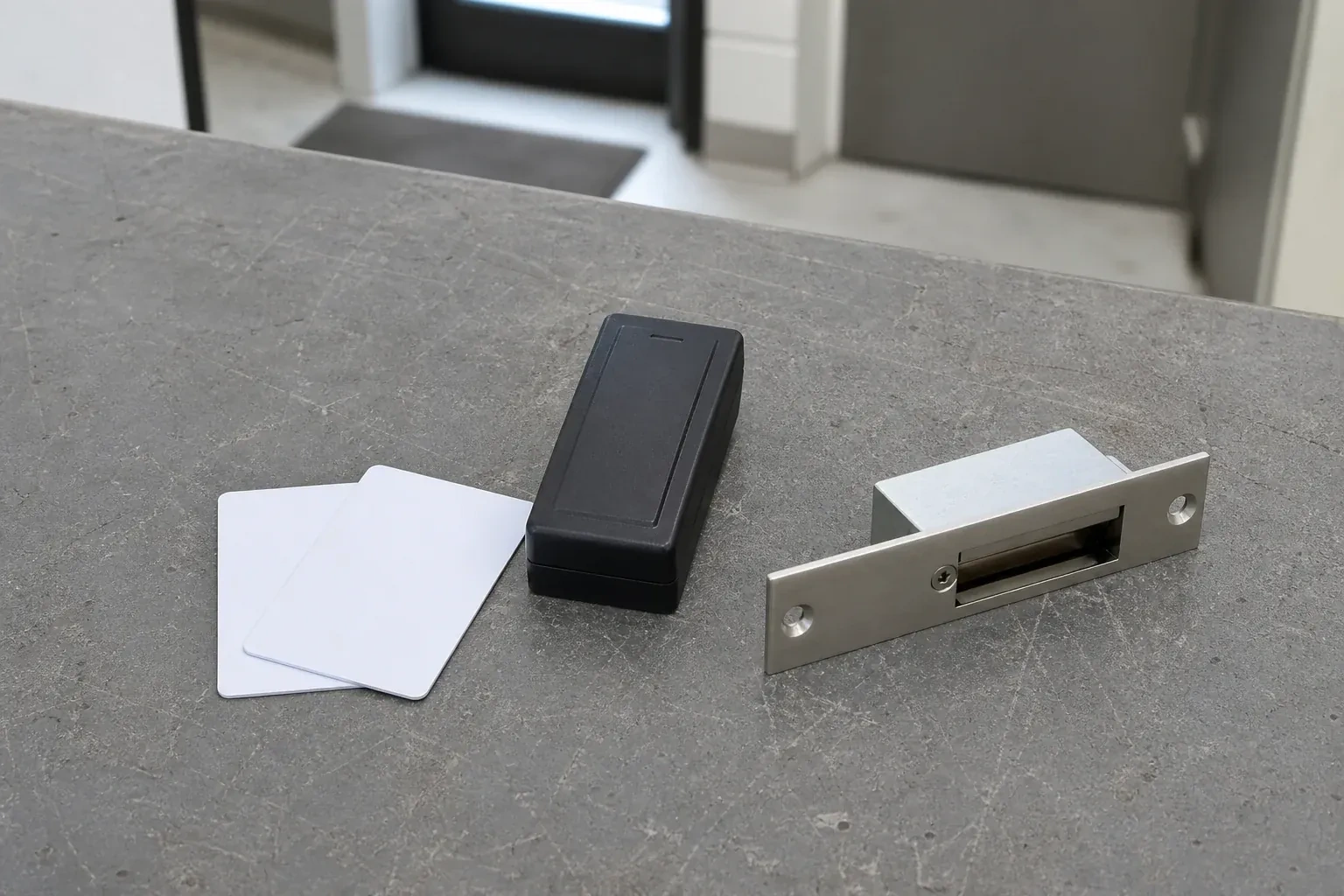
A single door can run on a standalone keypad or card reader that stores its own list of who may enter, though it can still need a power or network connection to work. A building with several controlled openings usually makes more sense on a networked setup instead, where distributed controllers share schedules and credentials and management software brings their logs together into one view. The locksmith sizes the choice to how many doors need controlling and how much the business wants to manage centrally, rather than defaulting to a single approach for every job.
How the visit goesYou just leased the empty unit next door and want the new tenant to open their own suite without a key to yours, to the loading dock, or to the electrical room down the hall.
Access Control Installation
How the visit goes
Checking the network before relying on it
A networked controller usually needs a live network connection to report events and accept schedule changes, so where that option is on the table, the survey includes a look at the building's existing network: is there a switch port near where the controller will sit, does the building's technology policy allow another device on the network, and does a networked system suit the business better than several standalone readers that need no network at all. Answering this before ordering hardware avoids discovering, midway through the job, that the simpler standalone option was the better fit all along.
Keying a mechanical override into the same system
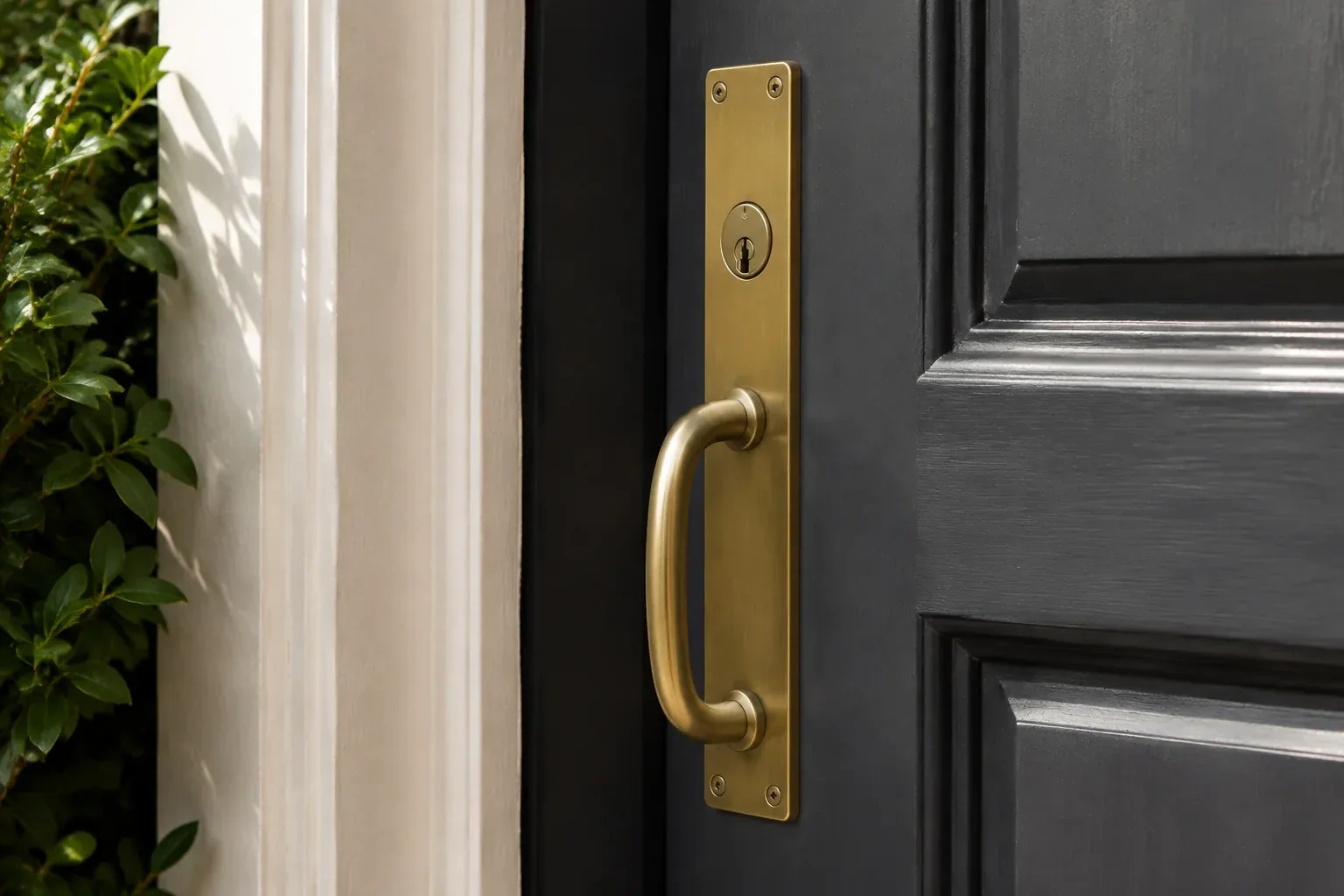
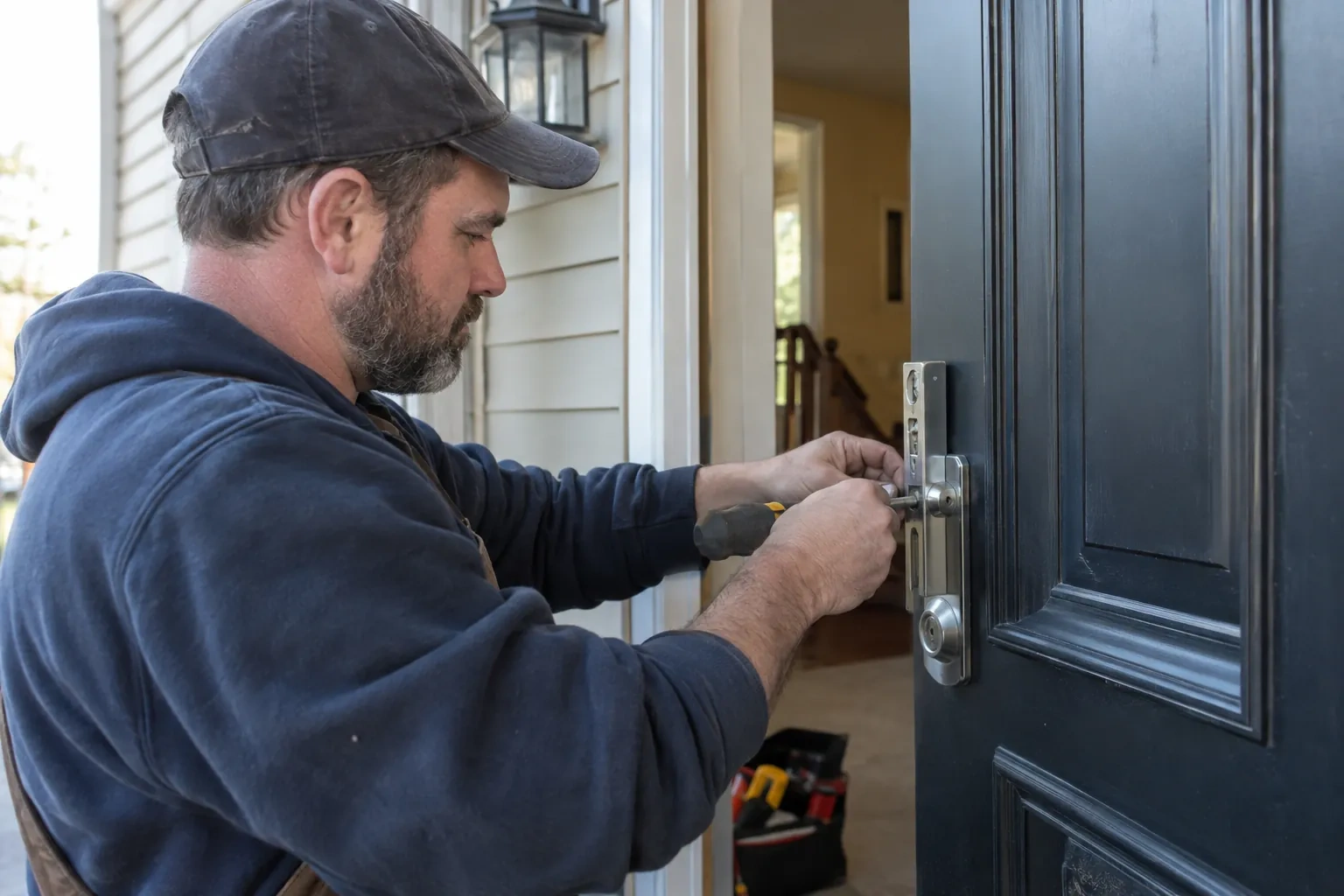
Where the selected hardware supports one, the locksmith fits a conventional cylinder alongside the electronic reader, cut to work with the rest of the building's keys rather than sitting apart as an odd one out; some access-controlled hardware is built without a key cylinder at all. On a door getting the override, the locksmith confirms it operates the latch or bolt cleanly with the electronic hardware in place, and notes who on staff will hold that key. On that door, a dead battery, a controller fault, or a power outage becomes an inconvenience rather than a locked business, since it still opens the ordinary way while the issue is sorted out.
Reading the entry log
Every controller keeps a record of which credential was presented at which door and when, and, where a door position switch is fitted, whether the door actually opened; that log is available to the administrator whenever it is needed, not only after something has gone wrong. Pulling a recent day's entries for the stockroom, checking whether the loading dock was opened outside its scheduled window, or confirming a contractor's credential was only used on the days they were on site are ordinary lookups rather than a special request, though the record shows the credential used rather than proof of who held it. Reviewing the log occasionally, rather than only when there is a problem, is a genuinely useful habit.
Access Control Installation
In the van
Card and fob readers
Keypad readers
Door position switches
Power supply with battery backup
Fire alarm interface relay
Access Control Installation
What affects the quote
The building's age and frame material
A modern hollow metal frame generally accepts new hardware with less adjustment than an older wood frame or a historic building, where matching the existing appearance and construction takes extra care.
Distance between the doors and the controller
A building where every controlled door sits close to where the controller will be mounted needs less cable and fewer pull points than one with openings spread across several floors or a large footprint.
Room left for future doors
Sizing the controller and power supply with some spare capacity for a door or two added later costs a little more at installation but avoids a second controller purchase when the building later adds an opening.
What to have ready
- Do any doors need different hours than the rest of the building?
- Who in the business will manage the system once it is installed?
- Is there an existing keypad or card system on any door now?
Access Control Installation: questions
QuestionsCan visitors or contractors be given temporary access?
Yes, a temporary credential can be issued for a contractor, a cleaner, or a visitor with its own schedule and, where the system supports it, an expiry so it stops working on its own once the job is done. This avoids handing out a permanent code or a key that then has to be tracked down and collected afterward.
Can a person's access change automatically by time of day or day of the week?
Yes. Access levels can be set to change automatically by time of day or day of the week, so a credential that opens a door during a shift can be denied outside it without anyone having to remember to switch it off manually. This is set up once in the schedule and then runs on its own from that point forward.
What happens at a networked location if the network or Wi-Fi goes down?
A standalone reader at a single door keeps working during a network or Wi-Fi outage, since it checks its own stored list rather than relying on a live connection. A networked controller generally keeps making local decisions at each door as well, though live updates, remote changes and off-site log access may pause until the connection returns.
Related services
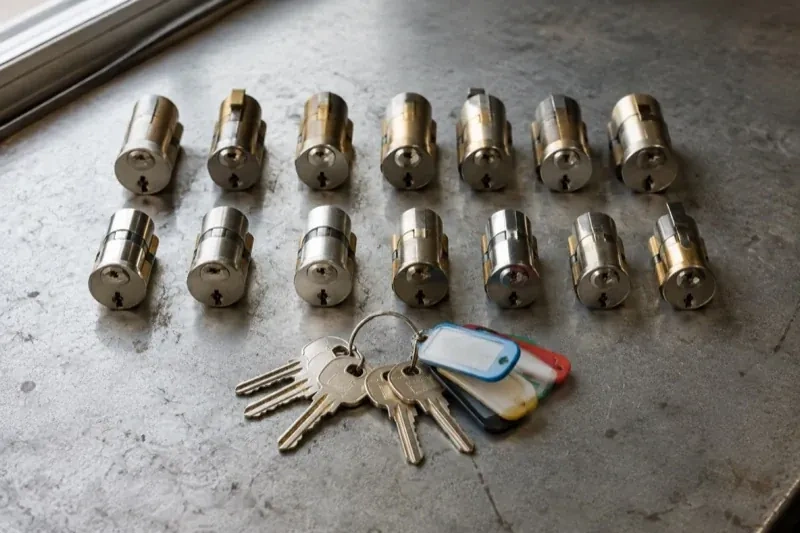
- Master Key System DesignThe new wing was built with its own brand of cylinder, so the two-year-old keys from the original building do not open a single door in the addition.
- Panic & Exit HardwareSomeone at the front counter always has to unlock the side door by hand before the lunch rush, because the round doorknob out there was never meant to be an exit for a room this size.
- Commercial-Grade Lock ReplacementThe kitchen delivery door gets shouldered open more than a hundred times a shift, and lately the latch slips past the strike plate instead of catching it on the first push.