Lockouts · Richmond Hill
Business Lockout Service in Richmond Hill
Minus eighteen with a wind, and the exterior cylinder on the shop door has frozen solid overnight after yesterday's slush.
In plain words
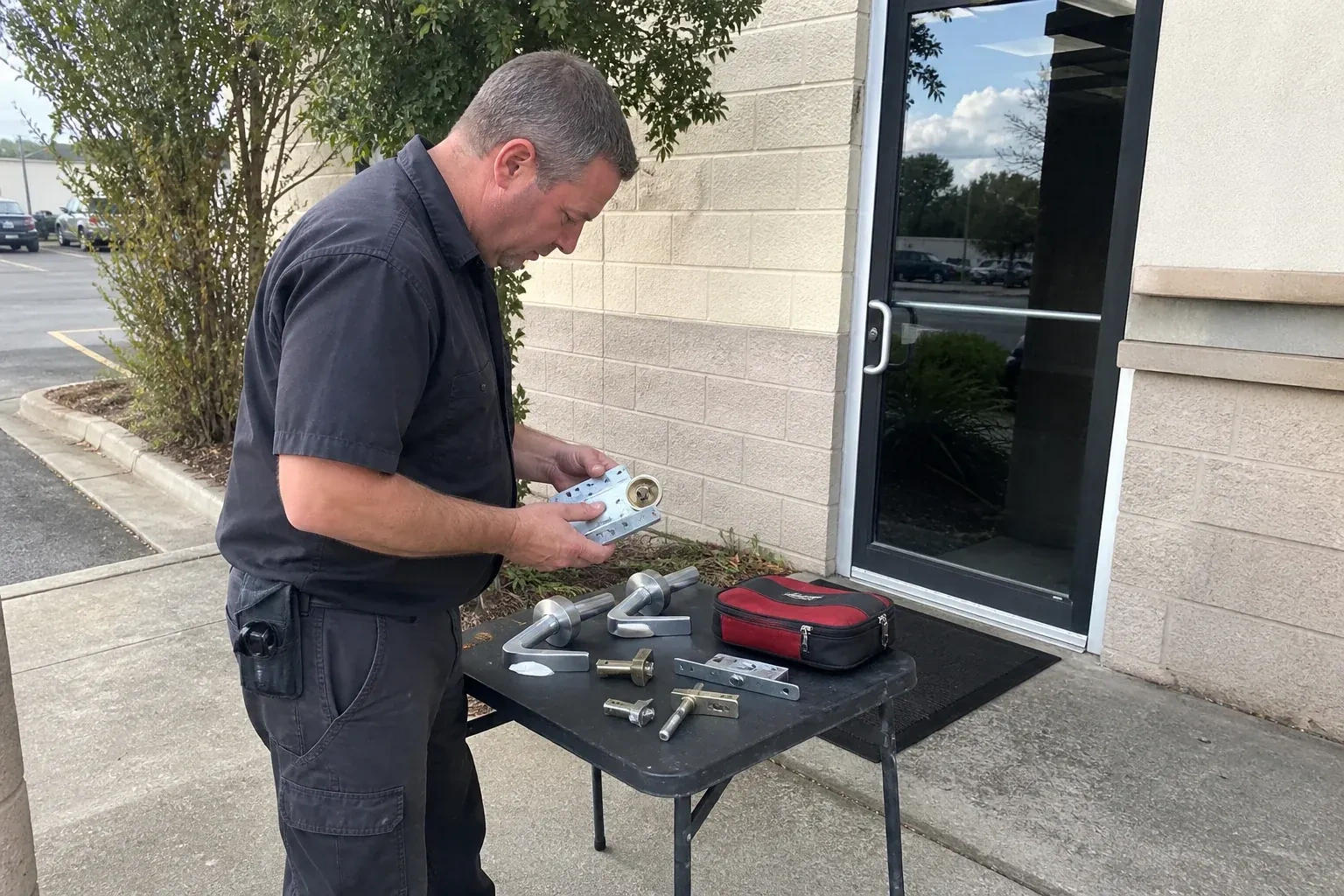
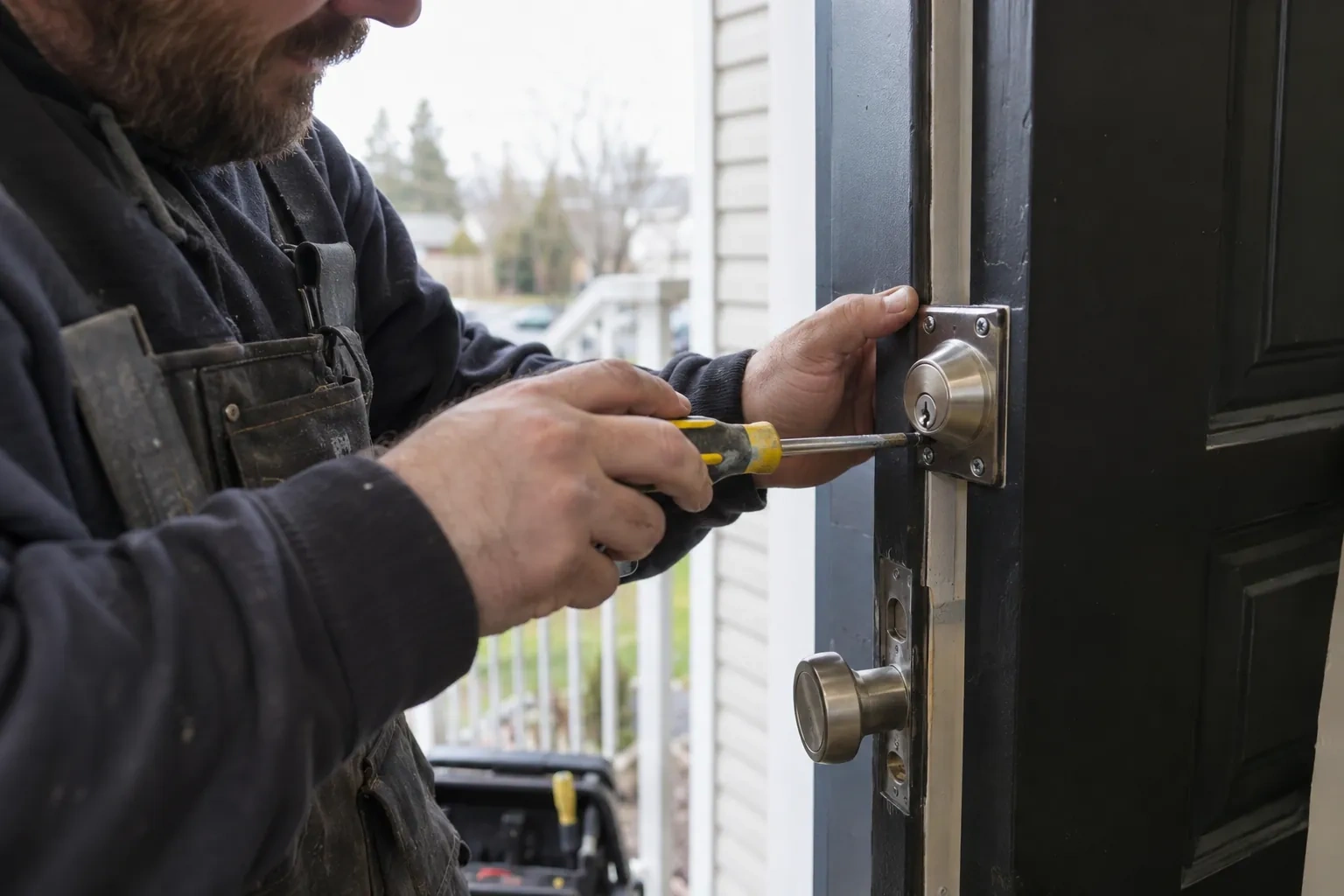
Heavy commercial doors move, and a good share of business lockouts are really door problems. A glass storefront door hangs on pivots or a continuous hinge that wear with thousands of openings a week, and once the door drops a few millimetres the hookbolt or latch binds against its strike. A hydraulic closer that has stiffened in the cold or lost its adjustment leaves a door that never latched properly the night before. Part of a lockout visit is reading the door: lifting it back into line, adjusting the strike and closer, and making sure the lock is asked to do only what a lock should do.
How the visit goesA cook stepped into the alley with the recycling and the rear door swung shut behind him. The push bar works from inside, but the outside handle has a keyed cylinder and the key is hanging in the kitchen office. The front door is locked too.
Business Lockout Service
How the visit goes
What happened to the key
The story of the key shapes everything after the door opens. A key sitting in an absent manager's pocket means the lock is sound and only entry is needed. A key that was lost on transit or never returned by a former employee is still out there, and the visit should end with that key made useless. A key that turned without result points to a worn cam or a failed deadlatch spring, and a key that snapped calls for careful extraction before any opening. A lock that worked at closing and refuses at opening suggests cold, grit or a dropped door rather than a cylinder fault. A minute on this saves a repeat call.
Extracting a snapped key and finding out why
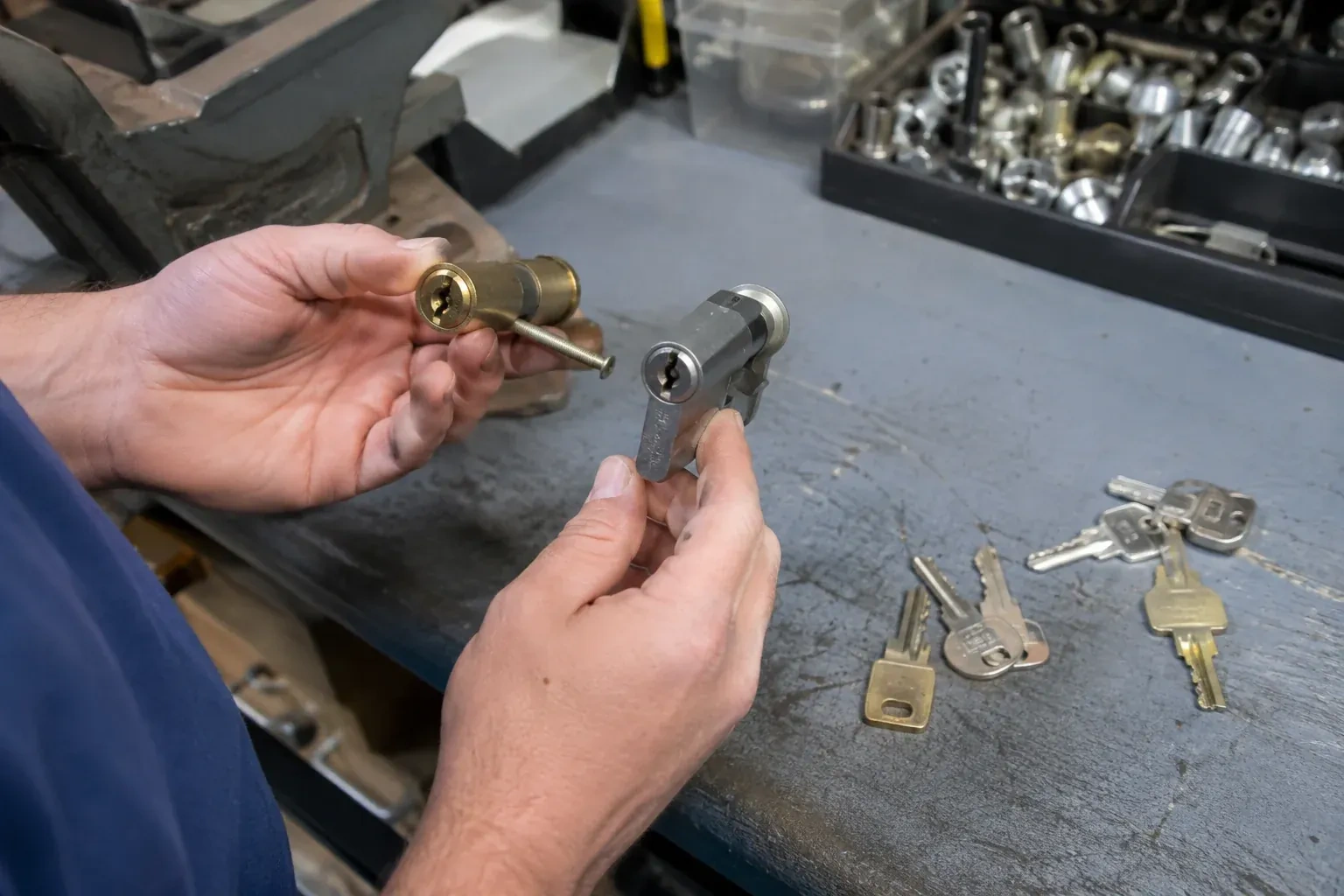
A key that broke off in a commercial cylinder is drawn out with extractor tools that grip the blade and pull it toward the face, never pushing it deeper. With the fragment out, the cylinder is picked or decoded and the door opened. The two halves of the key are then compared with a fresh blank, because a key rarely breaks in a healthy lock: a bent or thin copy, a cylinder full of grit, or a stiff cam behind it is usually the cause. The cylinder is cleaned and lubricated with a dry product, the cam checked for wear, and a new key cut from the code or from the pieces rather than from another tired copy.
Doors that open for the day and lock at night
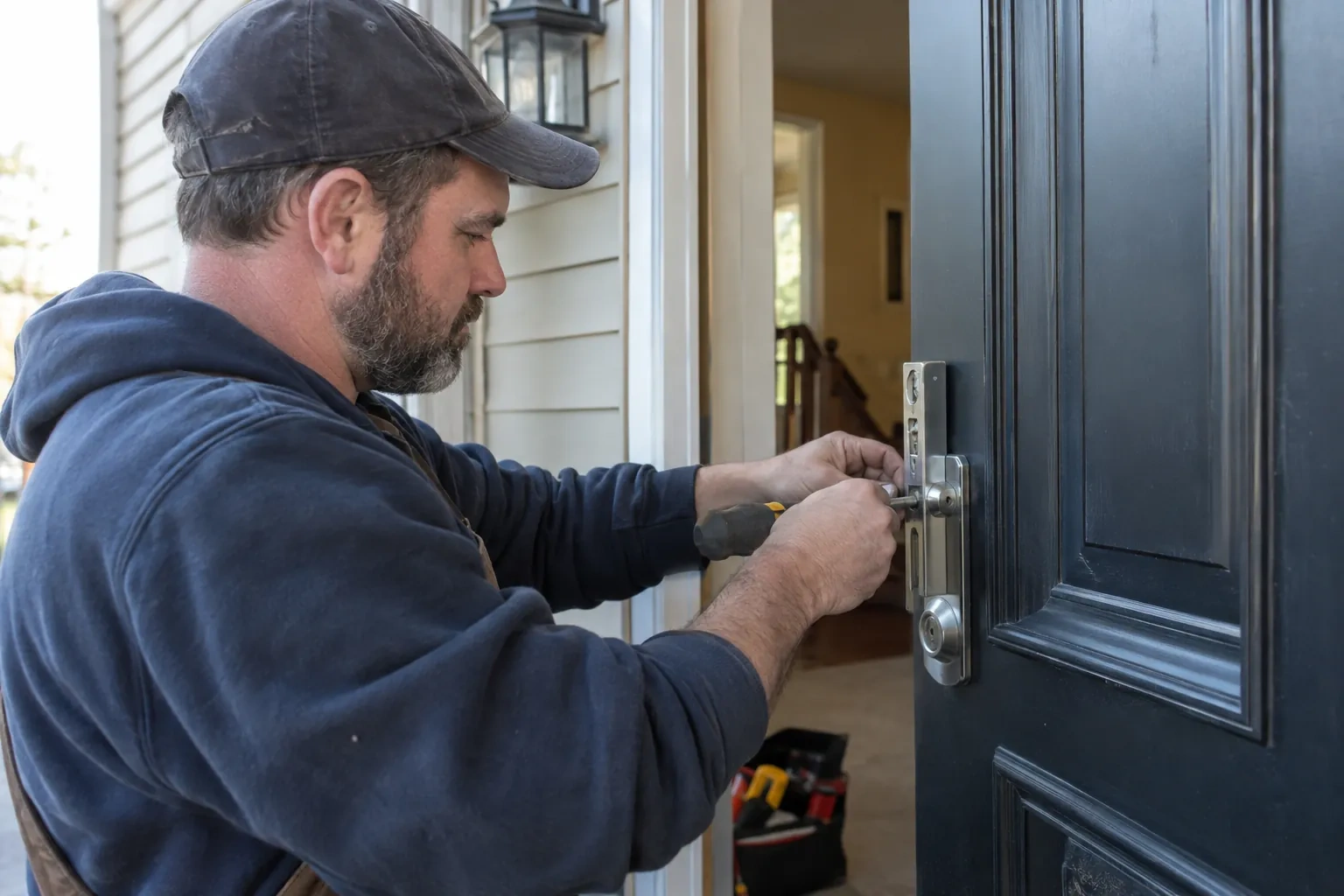
The visit ends with every door that was worked on cycled from both sides, open and closed, with the customer's own key. A hookbolt is watched to seat fully in its strike, a deadlatch is checked to catch on its own when the door swings shut under the closer, and a lever is tested to stay locked from the corridor while turning freely inside. Whoever locks up that evening is shown what was done, so the closing routine holds no surprises. Any hardware replaced is demonstrated and the packaging and old parts left with you, and the door is locked once more with your key before the van leaves.
Business Lockout Service
In the van
Control keys and core-removal tools
Key blanks and code cutter
Interchangeable cores pinned to system
Storefront deadlock and deadlatch bodies
Cylinder decoder and plug spinner
Business Lockout Service
What affects the quote
Door, pivot and closer adjustment
When the lockout was really a dropped door or a tired closer, lifting the door, adjusting pivots or a continuous hinge, moving the strike and resetting the closer are quoted as their own item beside the opening.
Master key system changes
Where the door belongs to a building-wide master key system, changing it means planning with the property manager and pinning cylinders so both your key and the building key still work, which is more careful work than a single rekey.
Keys cut and recorded
Each new key is cut and counted individually. Two for the owners and four for the opening staff is a different line from one spare, and restricted blanks are priced above ordinary ones.
What to have ready
- Are there other doors, a roll-up shutter, a gate or a padlock you also need opened?
- Has a key gone missing or left with a former employee, so that rekeying should follow?
- Has the door been dragging, scraping the threshold or failing to latch at closing recently?
Business Lockout Service: questions
QuestionsCan you also deal with the back door, the roll-up shutter and the gate?
Yes. A business lockout covers every opening the premises relies on: the rear service door with its exit device, a roll-up shutter and its padlock, the compound gate, a mailbox in the lobby and interior doors such as the cash office or server closet. Mention each one when you call so the right padlock shackles, cores and cylinders are in the van, and so cylinders that should share a key are handled together.
Do you work with our alarm company and access-control provider?
Yes, and it makes the visit smoother. The alarm station is told an entry is expected and the authorised person handles the disarm and password. For access control, the provider can often confirm the controller's status, unlock a magnetic lock remotely, or re-enrol fobs once you are inside, while the locksmith handles the mechanical side and the override cylinder. Nobody's wiring is cut; each party does the part it is set up to do.
Our storefront lock freezes every winter. What do you do about it?
On the day, the cylinder is thawed with lock de-icer or gentle warmth, never hot water or a flame near aluminium, and dried before a moisture-shedding dry lubricant goes in. To stop the pattern, the keyway gets a cover on the most exposed door, salt is kept off the bottom rail, and the closer is adjusted for cold fluid so the door still latches. A cylinder that freezes yearly may be better placed or shielded.